The Declaration of Independence, headed The unanimous Declaration of the thirteen united States of America on the document directed to be engrossed by Congress on July 19, 1776, is the founding docume
The 1823 facsimile of Timothy Matlack's engrossed copy of the Declaration of Independence


Thomas Jefferson, the principal author of the Declaration

The Assembly Room in Independence Hall in Philadelphia, where the Second Continental Congress unanimously adopted the Declaration of Independence

Writing the Declaration of Independence, 1776, a 1900 portrait by Jean Leon Gerome Ferris depicting Franklin, Adams, and Jefferson working on the Declaration
American Revolutionary War
Videos
The American Revolutionary War, also known as the Revolutionary War or American War of Independence or simply the American Revolution, was the armed conflict that comprised the final eight years of th
United States Declaration of Independence
…states no longer subject to British colonial rule, and has become one of the most circulated, reprinted, and influential documents in history. The American Revolutionary War commenced in April 1775 with the Battles of Lexington and Concord. Amid the growing tensions, delegates of the several colonies reconvened the Continental…
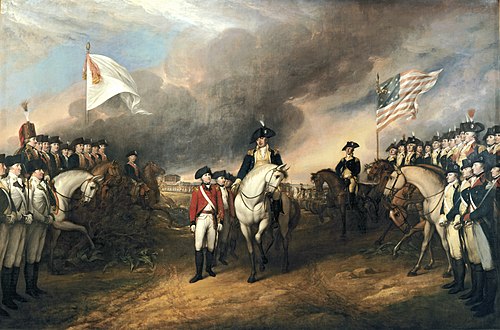
Surrender of Lord Cornwallis

Battle of Guilford Courthouse 15 March 1781

Battle of Trenton by Charles Mc Barron

Battleof Longisland