In the United States, a presidential transition is the process during which the president-elect of the United States prepares to take over the administration of the federal government of the United St

President-elect Jimmy Carter with U.S. secretary of defense Donald Rumsfeld and Chairman of the Joint Chiefs of Staff General George S. Brown and the other members of the Joint Chiefs of Staff during a visit to The Pentagon during presidential transition from Ford administration to Carter administration, December 17, 1976

President Hoover and President–elect Roosevelt riding together to the United States Capitol prior to the March 4, 1933 presidential inauguration

President Bill Clinton (right) and President-elect George W. Bush (left) meet in the Oval Office of the White House as part of the presidential transition.

President Barack Obama (right) and President-elect Donald Trump (left) meet in the Oval Office of the White House as part of the presidential transition.
The president of the United States is the head of state and head of government of the United States. The president directs the executive branch of the federal government and is the commander-in-chief

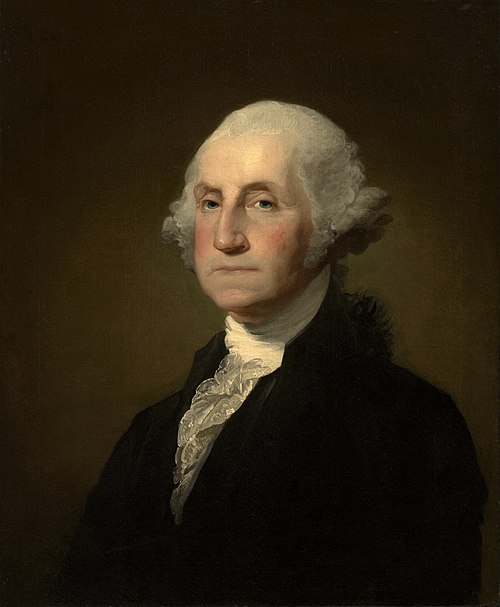
George Washington, the first president of the United States

President Franklin D. Roosevelt delivers a radio address in 1933.
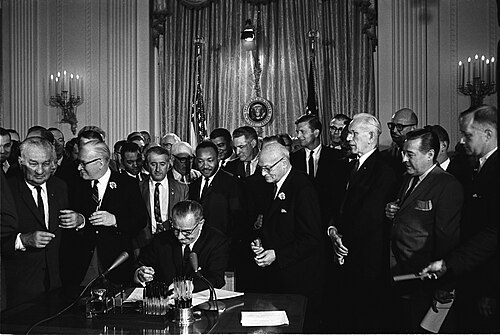
President Lyndon B. Johnson signs the 1964 Civil Rights Act at the White House on July 2, 1964, as Martin Luther King Jr. and others look on.