Universal jurisdiction
Videos
Universal jurisdiction is a legal principle that allows states or international organizations to claim criminal jurisdiction over an accused person, regardless of where the alleged crime was committed
Title page from the second edition (Amsterdam 1631) of De jure belli ac pacis. First published in 1625, Grotius advances a system of principles of natural law, which are held to be binding on all people and nations regardless of local custom.

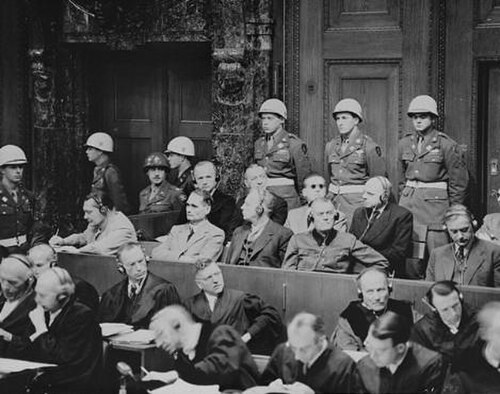
Defendants at the Nuremberg trials listening to translated evidence through headphones

Adolf Eichmann being sentenced to death at the conclusion of his trial
Crimes against humanity
Videos
Crimes against humanity are certain crimes committed as part of a large-scale attack against civilians. Unlike war crimes, crimes against humanity can be committed during both peace and war and agains
Universal jurisdiction
…have a logical and moral duty to prosecute individuals responsible; therefore, no place should be a safe house for those who have committed genocide, crimes against humanity, extrajudicial executions, war crimes, torture, or forced disappearances. Opponents, such as former US diplomat Henry Kissinger, argue that universal…

In 1915, the Armenian genocide (pictured) was officially condemned as a "crime against humanity" by Russia, France, and the United Kingdom.

Selection of Hungarian Jews at Auschwitz-II-Birkenau in German-occupied Poland during the final phase of the Holocaust

Leopold II, King of the Belgians and de facto owner of the Congo Free State, whose agents were accused of crimes against humanity

Nuremberg Trials. The defendants are in the dock. The main target of the prosecution was Hermann Göring (at the left edge on the first row of benches), considered to be the most important surviving official in the Third Reich after Hitler's death.