Urticating hair
Videos
Urticating hairs or urticating bristles are one of the primary defense mechanisms used by numerous plants, almost all New World tarantulas, and various lepidopteran caterpillars. Urtica is Latin for "
Young Grammostola rosea showing patch of urticating hairs, reflecting a camera flash


Urticating hairs of a stinging nettle

The larvae of Eutricha capensis (family Lasiocampidae) are practically covered with urticating hairs; the most potent are the stiff, short, orange-maroon bands across the thorax.
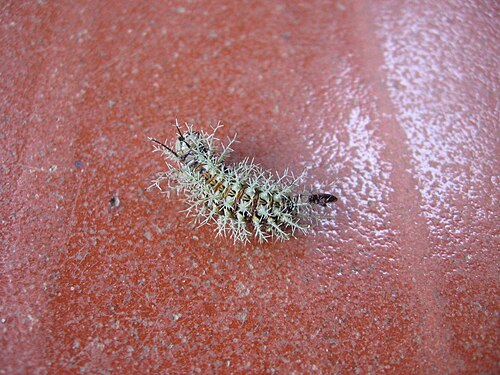
Larva of Lonomia obliqua, the most toxicologically-significant species, to mammals, of its genus; stings are a medical emergency and require treatment with antivenom.
Goliath birdeater
Videos
The Goliath birdeater is a large spider that belongs to the tarantula family Theraphosidae. Found in northern South America, it is the largest spider in the world by mass and body length, and second t
Urticating hair
…Others, such as those of the Brazilian giant white knee tarantula (Acanthoscurria geniculata), are moderately irritating. Still others, such as the Goliath birdeater (Theraphosa blondi), are far more severe. These bristles can result in painful rashes, and have been likened to sharp shards of fiberglass. After kicking…
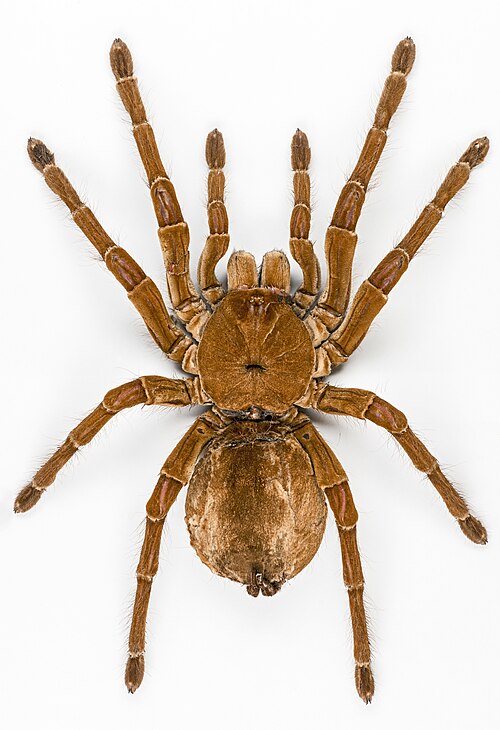
Theraphosa blondi MHNT

The Goliath birdeater found in South America

A captive adult female