Uruk
Videos
Uruk, the archeological site known today as Warka, was an ancient city in the Near East or West Asia, located east of the current bed of the Euphrates River, on an ancient, now-dried channel of the ri
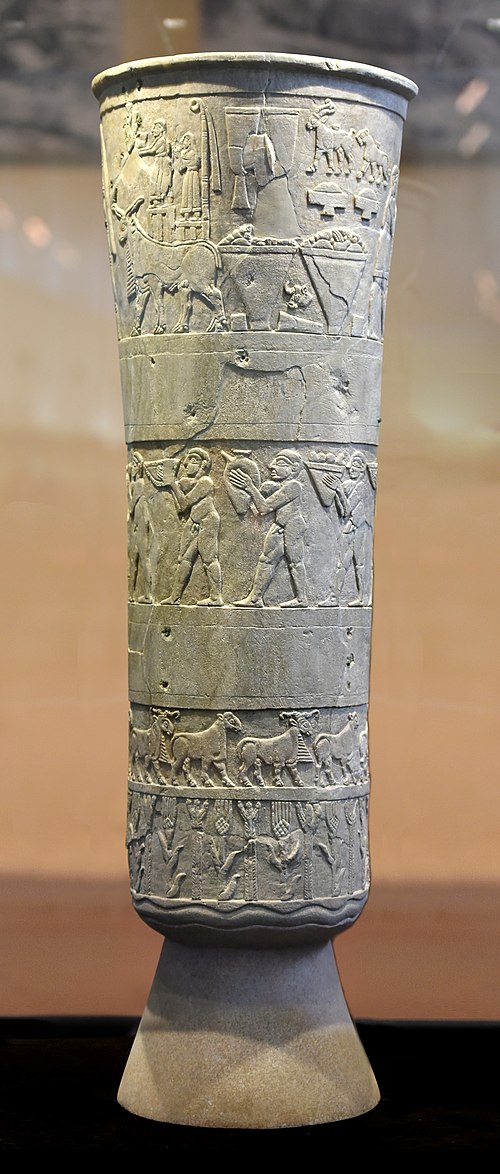
Devotional scene to Inanna, Warka Vase, c. 3200–3000 BC, Uruk. This is one of the earliest surviving works of narrative relief sculpture.

Clay impression of a cylinder seal with monstrous lions and lion-headed eagles, Mesopotamia, Uruk Period (4100–3000 BC). Louvre Museum.
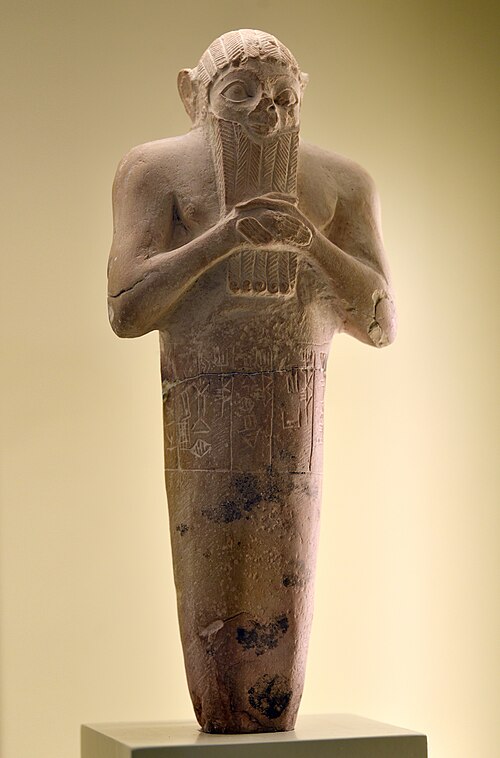
Foundation peg of Lugal-kisalsi, king of Uruk, Ur and Kish, circa 2380 BC. The inscription reads "For (the goddess) Namma, wife of (the god) An, Lugalkisalsi, King of Uruk, King of Ur, erected this temple of Namma". Pergamon Museum VA 4855.

Dedication tablet of Sîn-gāmil, ruler of Uruk, 18th century BC
Epic of Gilgamesh
Videos
The Epic of Gilgamesh is an epic from ancient Mesopotamia that is the world's oldest surviving example of narrative literature. The literary history of Gilgamesh begins with five Sumerian poems about
Uruk
…that Enmerkar constructed the House of Heaven (Sumerian: e₂-anna; cuneiform: 𒂍𒀭 E₂.AN) for the goddess Inanna in the Eanna District of Uruk. In the Epic of Gilgamesh, Gilgamesh builds the city wall around Uruk and is king of the city. Uruk went through several phases of growth, from the Early Uruk period (4000–3500…
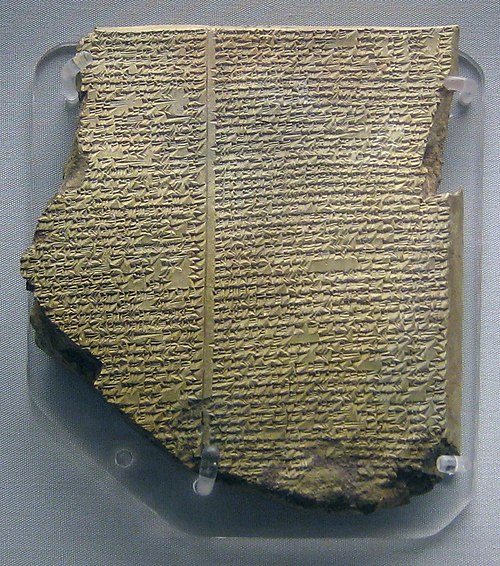
The Deluge tablet of the Gilgamesh epic in Akkadian

Ancient Assyrian statue currently in the Louvre, possibly representing Gilgamesh

Enkidu, Gilgamesh's friend. From Ur, Iraq, 2027–1763 BC, Iraq Museum

The Gilgamesh Dream tablet. From Iraq. Middle Babylonian Period, First Sealand Dynasty, 1732–1460 BCE. Iraq Museum, Baghdad. This dream tablet recounts a part of the epic of Gilgamesh in which the hero (Gilgamesh) describes his dreams to his mother (the goddess Ninsun), who interprets them as announcing the arrival of a new friend, who will become his companion.