V sign
Videos
The V sign is a hand gesture in which the index and middle fingers are raised and parted to make a V shape while the other fingers are clenched. It has various meanings, depending on the circumstances
The British Prime Minister Winston Churchill using the V sign. (Pictured in 1943) It is often interpreted as indicating the word "victory" which was widely used when the Allies won World War II.


U.S. presidential candidate Richard Nixon using the gesture as a victory sign in 1968

Actor Steve McQueen making the V sign (for peace) during a mug shot, after a drunk driving arrest (1972)

Churchill was initially unaware of the offensive meaning of holding up his hand like in this gesture (1942).
Steve McQueen
Videos
Terrence Stephen McQueen was an American actor. His antihero persona, emphasized during the height of 1960s counterculture, made him a top box office draw for his films of the late 1950s to the mid-19
V sign
…as a result of the controversy. McGregor's ban was lifted by Scotland manager Craig Levein in 2010 and he returned to the Scottish national squad. Steve McQueen gives the sign in the closing scene of the 1971 motorsport film, Le Mans. A still picture of the gesture was recorded by photographer Nigel Snowdon and…

McQueen in The Thomas Crown Affair, 1968

McQueen in The Great St. Louis Bank Robbery (1959)
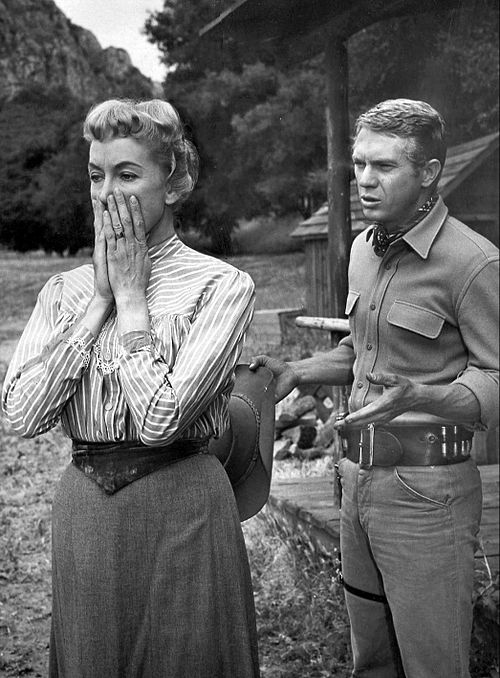
Virginia Gregg with McQueen in Wanted: Dead or Alive, 1959

(L–R) Yul Brynner, McQueen, Horst Buchholz, Charles Bronson, Robert Vaughn, Brad Dexter, and James Coburn in The Magnificent Seven, 1960