Vacuum brake
Videos
The vacuum brake is a braking system employed on trains and introduced in the mid-1860s. A variant, the automatic vacuum brake system, became almost universal in British train equipment and in countri
Driver's brake control in a Black 5
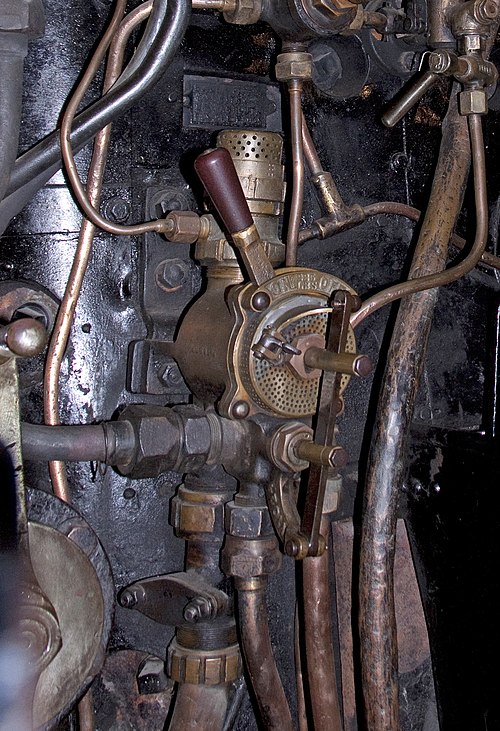
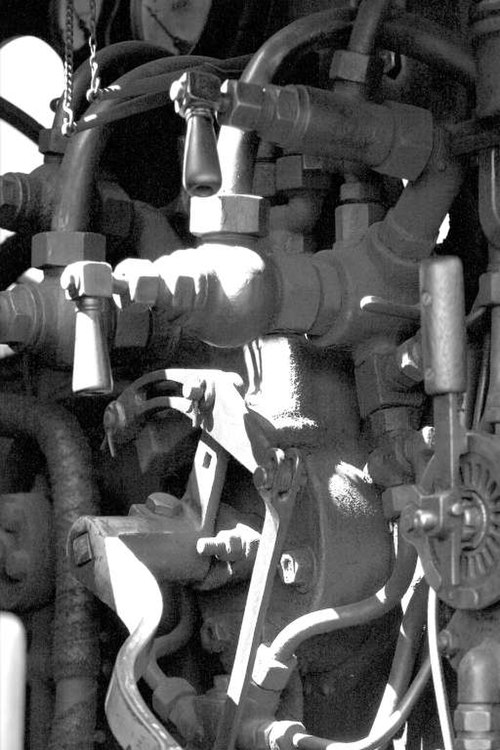
Graduable brake valve (right) and the small (upper) and large ejector cocks from a GWR locomotive

Driver's brake control on a combined control and ejector. The ejector steam nozzles, large and small, are beneath the hexagonal brass plugs on the left.
Vacuum ejector
Videos
A vacuum ejector, or simply ejector, or aspirator, is a type of vacuum pump, which produces vacuum by means of the Venturi effect.
Vacuum brake
…braking could be increased or decreased by the driver. Vacuum, rather than compressed air, was preferred because steam locomotives can be fitted with ejectors; venturi devices that create vacuum without moving parts. The simple vacuum system had the major defect that in the event of one of the hoses connecting…

A brass aspirator. The water inlet and outlet are at the top and bottom, respectively; the air inlet is on the side.