Vacuum tube
Videos
A vacuum tube, vac tube, electron tube, thermionic valve, or tube is a device that controls electric current flow in a high vacuum between electrodes to which an electric potential difference has been
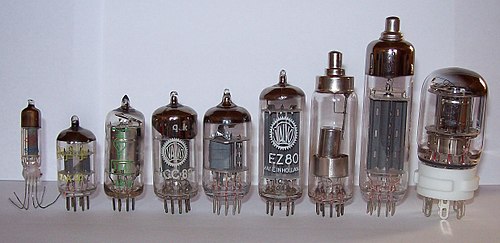
Later thermionic vacuum tubes, mostly miniature style, some with top cap connections for higher voltages

Operating tubes in an audio power amplifier, the hot cathodes emitting their distinctive red-orange glow
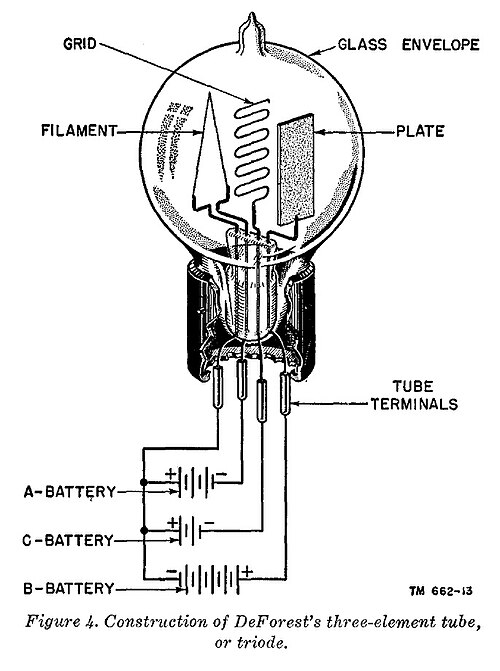
Illustration representing a primitive triode vacuum tube and the polarities of the typical DC operating potentials. Not shown are the impedances (resistors or inductors) that would be included in series with the C and B voltage sources.

US WWV radio station signal generator using vacuum tubes, 1943
Cavity magnetron
Videos
The cavity magnetron is a high-power vacuum tube used in early radar systems and subsequently in microwave ovens and in linear particle accelerators. A cavity magnetron generates microwaves using the
Vacuum tube
…receivers, computer monitors, and oscilloscopes until the early 21st century. Thermionic tubes are still employed in some applications, such as the magnetron used in microwave ovens, and some high-frequency amplifiers. Many audio enthusiasts prefer otherwise obsolete tube/valve amplifiers for the claimed…

Magnetron with section removed to exhibit the cavities. The cathode in the center is not visible. The antenna emitting microwaves is at the left. The magnets producing a field parallel to the long axis of the device are not shown.

A similar magnetron with a different section removed. Central cathode is visible; antenna conducting microwaves at the top; magnets are not shown.

Obsolete 9 GHz magnetron tube and magnets from a Soviet aircraft radar. The tube is embraced between the poles of two horseshoe-shaped alnico magnets (top, bottom), which create a magnetic field along the axis of the tube. The microwaves are emitted from the waveguide aperture (top) which in use is attached to a waveguide conducting the microwaves to the radar antenna. Modern tubes use rare-earth magnets, electromagnets or ferrite magnets which are much less bulky.

Split-anode magnetron (c. 1935). (left) The bare tube, about 11 cm high. (right) Installed for use between the poles of a strong permanent magnet