Vajravārāhī
Videos
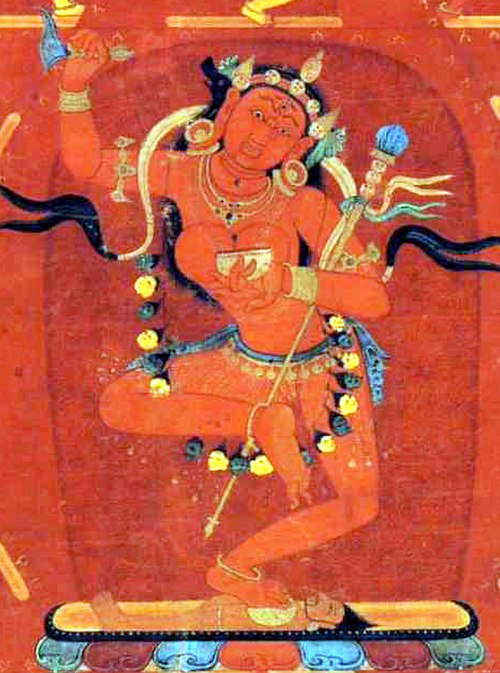
In Tibetan Buddhism, Vajravārāhī is considered a female buddha and "the root of all emanations of dakinis". As such, Vajravarahi manifests in the colors of white, yellow, red, green, blue, and black.
Buddha Vajravārāhī

Vajravarahi mandala
Vajrayogini
Videos
Vajrayoginī is an important figure in Buddhism, especially revered in Tibetan Buddhism. In Vajrayana she is considered a female Buddha and a ḍākiṇī. Vajrayoginī is often described with the epithet sar
Vajravārāhī
…varahi), representing victory over ignorance, depicted either behind her ear or above her head. Often, Vajravarahi is conflated iconographically with Vajrayogini. She is sometimes called the 'two-faced' Vajrayogini (shal nyi ma) because of the sow's head. The major iconographic differences are reflected in…

Painting of Vajrayoginī in the form of Nāropa's Ḍākinī

Vajravārāhī thangka

Tröma Nagmo, Tibetan Buddhist deity. Closeup from a painting of Machig Labdron, 19th century.

Chinnamunda, 14th-century painting, Nepal.