Valens
Videos
Valens was Roman emperor from 364 to 378. Following a largely unremarkable military career, he was named co-emperor by his elder brother Valentinian I, who gave him the eastern half of the Roman Empir
Marble bust possibly representing Valens or Honorius (Capitoline Museums)[citation needed]
![Marble bust possibly representing Valens or Honorius (Capitoline Museums)[citation needed]](https://upload.wikimedia.org/wikipedia/commons/thumb/2/2d/Valens_Honorius_Musei_Capitolini_MC494.jpg/500px-Valens_Honorius_Musei_Capitolini_MC494.jpg)

A solidus of Valens with a pearl diadem and a roseate fibula
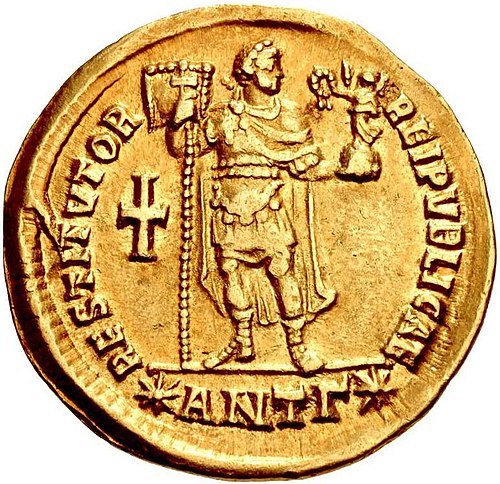
Reverse of a solidus of Valens, marked: restitutor reipublicae ("the restitutor of the Republic") and showing the emperor holding a vexillum and a globe supporting a Victory, who crowns him with a laurel wreath

Coin of Valens after his quinquennalia on 25 February 369, showing the three reigning emperors on the reverse marked: spes r p ("the hope of the Republic")
Battle of Adrianople
Videos
The Battle of Adrianople, also known as Battle of Hadrianopolis, was fought between the Eastern Roman army led by the Roman emperor Valens and Gothic rebels, led by Fritigern. The battle took place on
Valens
…co-emperor by his elder brother Valentinian I, who gave him the eastern half of the Roman Empire to rule. In 378, Valens was defeated and killed at the Battle of Adrianople against the invading Goths, which astonished contemporaries and marked the beginning of barbarian encroachment into Roman territory. As emperor, Valens…

A re-enactor portraying a junior Roman officer of the 4th century AD. Soldiers would have worn a similar panoply to this.