Vapor
Videos
In physics, a vapor or vapour is a substance in the gas phase at a temperature lower than its critical temperature, which means that the vapor can be condensed to a liquid by increasing the pressure o
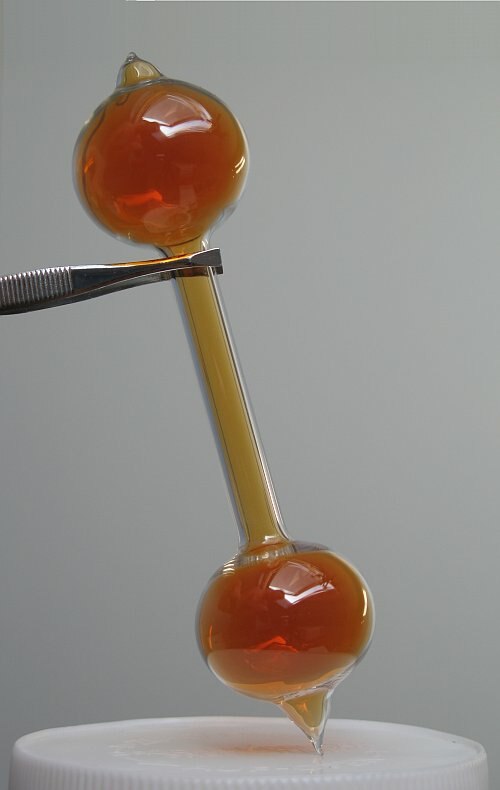
An ampule of nitrogen oxide vapor: brown nitrogen dioxide and colorless dinitrogen tetroxide, in equilibrium

If the vapor pressure exceeds the equilibrium value, it becomes supersaturated and condenses on any available nucleation sites e. g. particles of dust. This principle is used in cloud chambers, where particles of radiation are visualized because they nucleate formation of water droplets.

Invisible water vapor condenses to form visible water droplets called mist
Aerosol
Videos
An aerosol is a suspension of fine solid particles or liquid droplets in air or another gas. Aerosols can be generated from natural or human causes. The scientific term aerosol refers to the system co
Vapor
…the vapor can be condensed to a liquid by increasing the pressure on it without reducing the temperature of the vapor. A vapor is different from an aerosol. An aerosol is a suspension of tiny particles of liquid, solid, or both within a gas. For example, water has a critical temperature of 647 K (374 °C…

Smoke aerosol from wildfires in Quebec, Canada; eastern Long Island, NY, June 7, 2023 (local time approximately 2 pm). Nearest trees are about 500 m.

Mist and fog are aerosols

Photomicrograph made with a Scanning Electron Microscope (SEM): Fly ash particles at 2,000× magnification. Most of the particles in this aerosol are nearly spherical.

Aerosol pollution over northern India and Bangladesh