Varangian Guard
Videos
The Varangian Guard was an elite unit of the Byzantine army from the 10th to the 14th century who served as personal bodyguards to the Byzantine emperors. The Varangian Guard was known for being prima
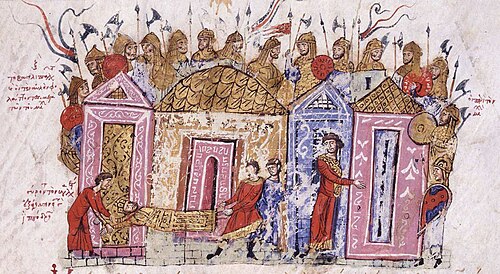
Depiction of the Varangian Guard (above) in the 11th century chronicle of John Skylitzes

An illumination of a scene from the Skylitzes Chronicle, depicting a Thracesian woman killing a Varangian who tried to rape her, whereupon his comrades praised her and gave her his possessions.

Seal of Michael, Grand Interpreter (megas diermeneutes) of the Guard

Piraeus Lion drawing of curved lindworm. The runes on the lion tell of Swedish warriors, likely Varangians, mercenaries in the service of the Byzantine (Eastern Roman) Emperor.
Harald Hardrada
Videos
Harald Sigurdsson, also known as Harald Hardrada or Harald III, was King of Norway from 1046 to 1066. He unsuccessfully claimed the Danish throne until 1064 and the English throne in 1066. Before beco
Varangian Guard
…alongside Normans recently arrived in Italy seeking adventure and Lombards from Byzantine-held Apulia. A prominent member of the Guard at this time was Harald Hardrada, later King of Norway as Harald III (1046–1066). However, when Maniakes ostracised the Lombards by publicly humiliating their leader, Arduin, the…

Harald's wife Elisiv of Kiev, daughter of Yaroslav the Wise

The present Klostergata in Trondheim, site of the former Helgeseter Priory

Oslo City Hall (centre of image) with relief depicting Harald on the western façade