Variometer
Videos
In aviation, a variometer – also known as a rate of climb and descent indicator (RCDI), rate-of-climb indicator, vertical speed indicator (VSI), or vertical velocity indicator (VVI) – is one of the flight instruments in an aircraft used to inform the pilot of the rate of descent or climb. It can be calibrated in metres per second, feet per minute or knots, depending on country and type of aircraft. It is typically connected to the aircraft's external static pressure source.


Diaphragm Variometer operation

Schematic drawing of the internals of a classic aircraft vertical speed indicator
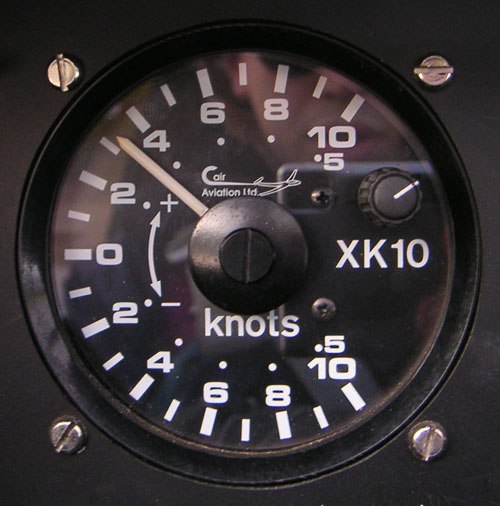
Panel mounted variometer for gliders, showing vertical speed in knots (kn).
Speed to fly
Videos
Speed to fly is a principle used by soaring pilots when flying between sources of lift, usually thermals, ridge lift and wave. The aim is to maximize the average cross-country speed by optimizing the airspeed in both rising and sinking air. The optimal airspeed is independent of the wind speed, because the fastest average speed achievable through the airmass corresponds to the fastest achievable average groundspeed.

MacCready speed to fly ring for a variometer. The outer ring show various airspeeds, while the variometer shows climb rate. The index arrow, white triangle, on the ring is placed against the expected rate of climb at the next thermal. The variometer needle will then point to the optimum airspeed, listed on the ring, to be flown to that thermal. The greater the expected rate of climb, the more clockwise the ring is rotated, and the faster is the optimum airspeed.