Vesta (mythology)
Videos
Vesta is the virgin goddess of the hearth, home, and family in Roman religion. She was rarely depicted in human form, and was more often represented by the fire of her temple in the Forum Romanum. Ent

Rare depiction of Vesta in human form, as the central figure from the Lararium of a bakery at Pompeii, 1st century
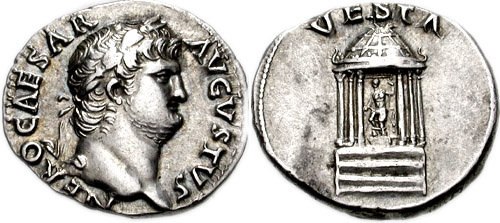
Coin issued under Nero: the reverse depicts the cult statue of Vesta, holding a patera and scepter, within her hexastyle temple.

Denarius of 60 BC; veiled and draped Vesta on the left, with a lamp next to her.

Temple of Vesta in a 2009 photo
Dii Consentes
Videos
The Dii Consentes, also known as Di or Dei Consentes, or The Harmonious Gods, is an ancient list of twelve major deities, six gods and six goddesses, in the pantheon of Ancient Rome. Their gilt statue
Vesta (mythology)
…In some Roman traditions, Rome's founders Romulus and Remus and the benevolent king Servius Tullius were conceived in this way. Vesta was among the Dii Consentes, twelve of the most honored gods in the Roman pantheon. She was the daughter of Saturn and Ops, and sister of Jupiter, Neptune, Pluto, Juno, and Ceres…

Although the ritual purpose of this 1st century BCE altar from Gabii is unclear, the twelve deities depicted correspond to the Dii Consentes
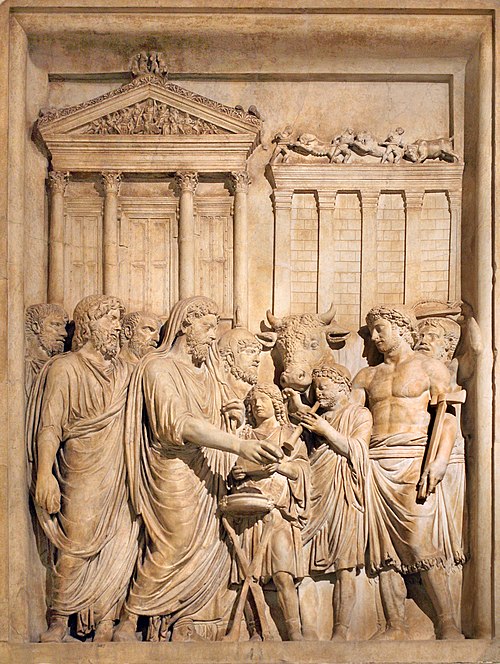
Bas relief from Arch of Marcus Aurelius showing sacrifice