Victory ship
Videos
The Victory ship is a class of cargo ships produced in large numbers by American shipyards during World War II. They were a more modern design compared to the earlier Liberty ship, were slightly large
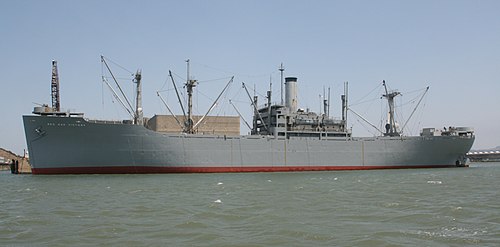
SS Red Oak Victory, now a museum ship

Victory cargo ships are lined up at California Shipbuilding Corporation in Los Angeles, California.

Model of a Victory ship's superstructure and center cranes. The engine room is located below the superstructure. This model is on display at the American Merchant Marine Museum in Kings Point, New York.

War Shipping Administration photo showing early 1944 Victory ship construction at California Shipbuilding Corporation with a May 1945 war tonnage production chart
Liberty ship
Videos
Liberty ships are a class of cargo ship built in the United States during World War II under the Emergency Shipbuilding Program. Although British in concept, the design was adopted by the United State
Victory ship
…is a class of cargo ships produced in large numbers by American shipyards during World War II. They were a more modern design compared to the earlier Liberty ship, were slightly larger and had more powerful steam turbine engines, giving them higher speed to allow participation in high-speed convoys and make them…

SS Jeremiah O'Brien, one of the four surviving Liberty ships, photographed in 2022

A colored diagram of compartments on a Liberty ship, from the right side, front to the right Machinery spaces Command and control Liquid stores Dry cargo Engine room Misc Dry stores Habitation

140-ton vertical triple expansion steam engine of the type used to power World War II Liberty ships, assembled for testing before delivery

Engine room (model cutaway)