Viking art
Videos
Viking art, also known commonly as Norse art, is a term widely accepted for the art of Scandinavian Norsemen and Viking settlements further afield—particularly in the British Isles and Iceland—during

Gold jewellery from the 10th century Hiddensee treasure, mixing Norse pagan and Christian symbols.

Pair of "tortoise brooches," which were worn by married Viking women

Decorated plaque in whale bone, 8th–late 9th century, 22×18.3×0.8 cm (8.7×7.2×0.3 in)

Wood carving at Urnes Stave Church in Norway—a rare survival.
Vikings
Videos
Vikings were a seafaring people originally from Scandinavia, who from the late 8th to the late 11th centuries raided, pirated, traded, and settled throughout parts of Europe. They voyaged as far as th
Viking art
…Viking art, also known commonly as Norse art, is a term widely accepted for the art of Scandinavian Norsemen and Viking settlements further afield—particularly in the British Isles and Iceland—during the Viking Age of the 8th-11th centuries. Viking art has many design…

Depiction of Vikings sailing a longship from c. 1100

A Viking Age depiction from the Tjängvide image stone, on Gotland

Runestone raised in memory of Gunnarr by Tóki the Viking.
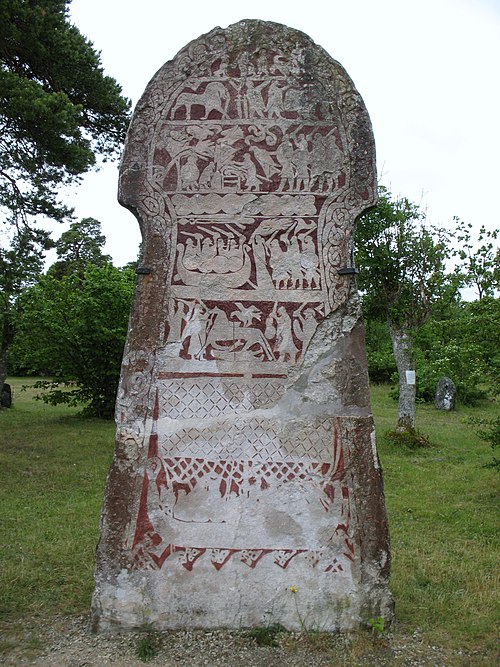
The Stora Hammars I image stone, showing the saga of Hildr, under what may be the rite of blood eagle, and on the bottom a Viking ship