Viol
Videos
The viol, or viola da gamba, or informally gamba, is a bowed and fretted string instrument that is played da gamba. It is distinct from the later violin, or viola da braccio; and it is any one of the
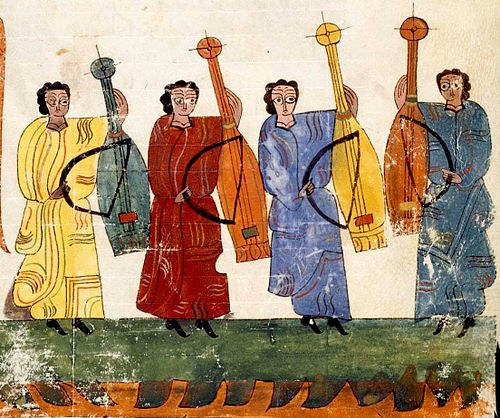
Spanish instruments from before the name viol or vihuela were coined, played with a bow. From Commentary on the Apocalypse, Codice VITR 14.1, "second third of 10th century".

Detail from a painting by Jan Verkolje, Dutch, c. 1674, Elegant Couple (A Musical Interlude). The theme is similar to the classic Music Lesson genre, and features a bass viol, virginal, and cittern (in the woman's hand, out of frame in this detail; see full image). This image highlights the domestic amateur class of viol players.

Late 16th or early 17th-century viol from a Japanese painting. Has four courses of strings.

Painting by Reza Abbasi c. 1634, showing a musician dressed in European clothing, playing what may be a viol. The instrument has Persian-style soundholes and a thinner neck than the instrument in the Japanese painting.
Violin family
Videos
The violin family of musical instruments was developed in Italy in the 16th century. At the time the name of this family of instruments was viole da braccio which was used to distinguish them from the
Viol
…Italian: ), or informally gamba, is a bowed and fretted string instrument that is played da gamba (i.e. "on the leg"). It is distinct from the later violin, or viola da braccio; and it is any one of the earlier viol family of bowed, fretted, and stringed instruments with hollow wooden bodies and pegboxes…

Violin, viola, and cello bow frogs (top to bottom)

An octobass

Cello front side

AGK bass 1 full