Waltzing Matilda
Videos
"Waltzing Matilda" is a song developed in the Australian style of poetry and folk music called a bush ballad. It has been described as the country's "unofficial national anthem".
Original manuscript, transcribed by Christina Macpherson, c. 1895


Combo Waterhole, thought to be the location that inspired the story of "Waltzing Matilda"

Fortified temporary shearing shed at Dagworth Station following the 1894 arson of the main shed. The three troopers at left may be those referred to in "Waltzing Matilda", while the squatter was Bob Macpherson, fourth from right.

Photograph of a swagman, c. 1901, holding a billy and carrying a swag on his back
Swagman
Videos
A swagman was a transient labourer who travelled by foot from farm to farm carrying his belongings in a swag. The term originated in Australia in the 19th century and was later used in New Zealand.
Waltzing Matilda
…back, a slang expression that may have originally been repurposed from a work of light verse by Charles Godfrey Leland. The song narrates the story of a swagman (itinerant worker) boiling a billy at a bush camp and capturing a stray jumbuck (sheep) to eat. When the jumbuck's owner, a squatter (grazier), and…

Swagman, n.d.
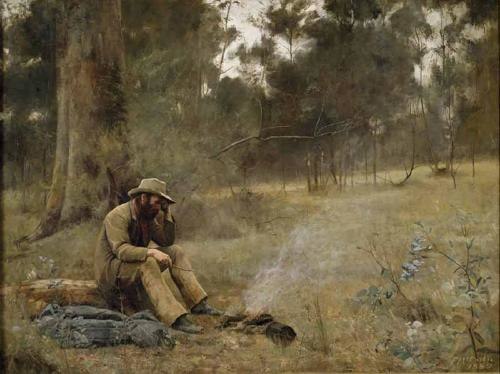
Down on His Luck, painted by Frederick McCubbin in 1889, depicts a melancholic swagman "on the Wallaby"

'The Shiner', a South Island swagman from the 1870s to the 1920s