Water resources
Videos
Water resources are natural resources of water that are potentially useful for humans. For example, they serve as a source of drinking water or irrigation water. These resources may consist of freshwa
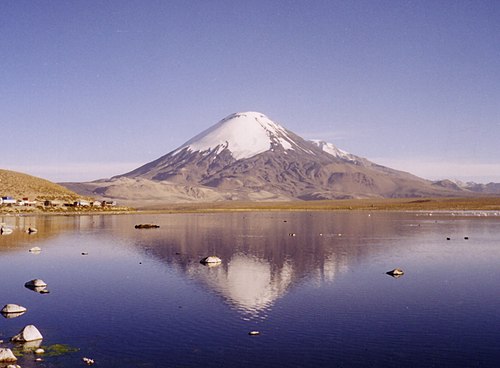
Lake Chungará and Parinacota volcano in northern Chile

Panorama of a natural wetland (Sinclair Wetlands, New Zealand)

Total renewable freshwater resources of the world, in mm/year (1 mm is equivalent to 1 L of water per m2) (long-term average for the years 1961–1990). Resolution is 0.5° longitude x 0.5° latitude (equivalent to 55 km x 55 km at the equator). Computed by the global freshwater model WaterGAP.

Irrigation of agricultural fields in Andalusia, Spain. Irrigation canal on the left.
Fresh water
Videos
Fresh water or freshwater is any naturally occurring liquid or frozen water containing low concentrations of dissolved salts and other total dissolved solids. The term excludes seawater and brackish w
Water resources
…water that are potentially useful for humans. For example, they serve as a source of drinking water or irrigation water. These resources may consist of freshwater from natural sources or water produced artificially from other sources, such as reclaimed water (wastewater) or desalinated water (seawater). Approximately…

Freshwater ecosystem

Amazonas, Iquitos Leticia, Kolumbien

Cove with Shamans Rock Olkhon Island Lake Baikal Russia

Transition from Sawgrass to Coastal Habitat, NPS Photo