Water supply and sanitation in Indonesia is characterized by poor levels of access and service quality. More than 16 million people lack access to an at least basic water source and almost 33 million

Most rivers in Indonesia, such as the Serayu River in Central Java shown here, are relatively short, seasonal and carry a high sediment load.
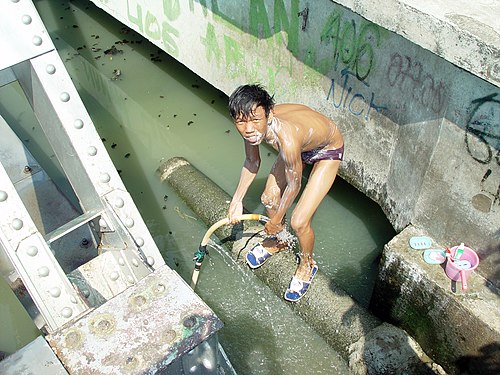
Because of lack of clean water, slum inhabitants in Jakarta have to resort to wash themselves using water from canals.

Springs, such as this one in Batu Karut in the Sukabumi regency on Java, are an important source of water in rural areas of Indonesia.

The water supply of Jakarta has been privatized since 1997 through two 25-year concession contracts.
Improved sanitation
Videos
Improved sanitation is a term used to categorize types of sanitation for monitoring purposes. It refers to the management of human feces at the household level. The term was coined by the Joint Monito
Water supply and sanitation in Indonesia
…million people lack access to an at least basic water source and almost 33 million of the country's 275 million population has no access to at least basic sanitation. Only about 2% of people have access to sewerage in urban areas; this is one of the lowest in the world among middle-income countries. Water pollution…

"Sanitation value chain" which starts with toilets

Improved sanitation example: pit latrine with a slab covering the drop hole and handwashing station in Burundi

A mason building latrines to slabs which can be used for toilets to achieve improved sanitation in Dadaab, Kenya

Unimproved sanitation example: pit latrine without slab in Lusaka, Zambia