Western Wall
Videos
The Western Wall is an ancient retaining wall of the built-up hill known to Jews and Christians as the Temple Mount of Jerusalem. Its most famous section, known by the same name, often shortened by Je
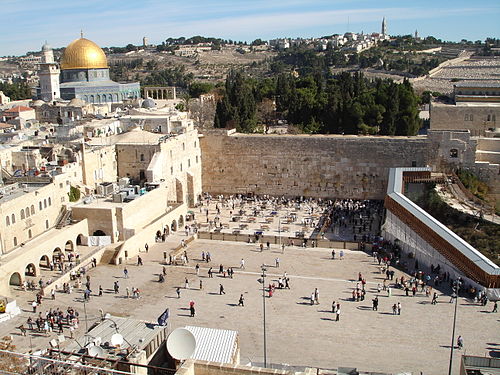
A view of the Western Wall and plaza

Herodian ashlars of the Western Wall with the fine-grained stones heavily eroded alongside the perserved coarse-grained stones

A panorama of the Western Wall with the Dome of the Rock (left) and al-Aqsa mosque (right) in the background

The Western Wall and Dome of the Rock
Herod the Great
Videos
Herod I or Herod the Great was a Roman Jewish client king of the Herodian kingdom of Judea. He is known for his colossal building projects. Among these works are the rebuilding of the Second Temple in
Western Wall
…total height, including its 17 courses located below street level, dates from the end of the Second Temple period, and is believed to have been begun by Herod the Great. The very large stone blocks of the lower courses are Herodian, the courses of medium-sized stones above them were added during the Umayyad period…

Herod's Temple as depicted on the Holyland Model of Jerusalem. The expansion of the Temple was Herod's most ambitious project.

Ruins of Caesarea's harbor

Massacre of the Innocents, 10th century Codex Egberti. Herod on the left.