William Caslon
Videos
William Caslon I, also known as William Caslon the Elder, was an English typefounder. The distinction and legibility of his type secured him the patronage of the leading printers of the day in England
Portrait (Caslon holding a specimen of his types) by Francis Kyte

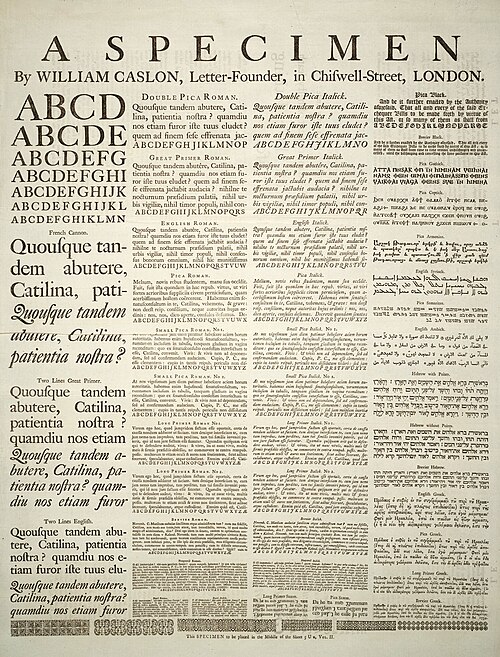
A specimen sheet of typefaces and languages, by William Caslon I, letter founder; from the 1728 Cyclopaedia

The Caslon family tomb in the churchyard of St Luke Old Street, London. The church is now a music venue and rehearsal space.
Typeface
Videos
A typeface is a design of letters, numbers and other symbols, to be used in printing or for electronic display. Most typefaces include variations in size, weight, slope, width, and so on. Each of thes
William Caslon
…a specimen of his types) by Francis Kyte Born 1692/93 Cradley, Worcestershire Died 23 January 1766 (aged 72–73) London, England Occupations Gunsmith type designer William Caslon I (1692/93 – 23 January 1766), also known as William Caslon the Elder, was an English typefounder. The distinction and legibility of his…

London Underground's Johnston typeface, printed on a large sign

Specimens of printed floral borders from an 1897 type foundry specimen book