The British literary figure and designer William Morris, a founder of the British Arts and Crafts Movement, was especially known for his wallpaper designs. These were created for the firm he founded w

Jasmine wallpaper (1872) by William Morris

Design for Trellis wallpaper (1862)

Finished Trellis wallpaper printed in 1864

Daisy Design (1864)
Arts and Crafts movement
Videos
The Arts and Crafts movement was an international trend in the decorative and fine arts that developed earliest and most fully in the British Isles and subsequently spread across the British Empire an
William Morris wallpaper designs
…The British literary figure and designer William Morris (1834-1896), a founder of the British Arts and Crafts Movement, was especially known for his wallpaper designs. These were created for the firm he founded with his partners in 1861, Morris, Marshall, Faulkner and…
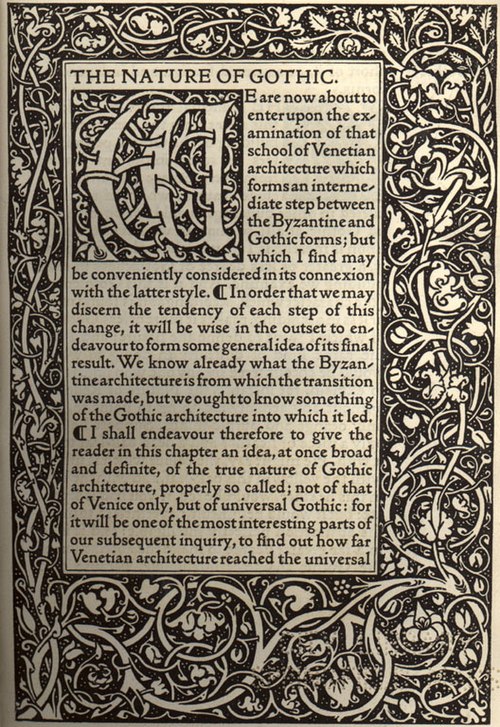
The Nature of Gothic by John Ruskin, printed by William Morris at the Kelmscott Press in 1892 in his Golden Type inspired by the 15th-century printer Nicolas Jenson. This chapter from The Stones of Venice was a sort of manifesto for the Arts and Crafts movement.

Pugin's house "The Grange" in Ramsgate, from 1843. Its simplified Gothic Revival style, adapted to domestic building, helped shape the architecture of the Arts and Crafts movement.

William Morris, a designer and thinker who was a key influence on the Arts and Crafts movement