William Wallace
Videos
Sir William Wallace was a Scottish knight who became one of the main leaders during the First War of Scottish Independence.
First known depiction of Sir William Wallace by the 11th Earl of Buchan

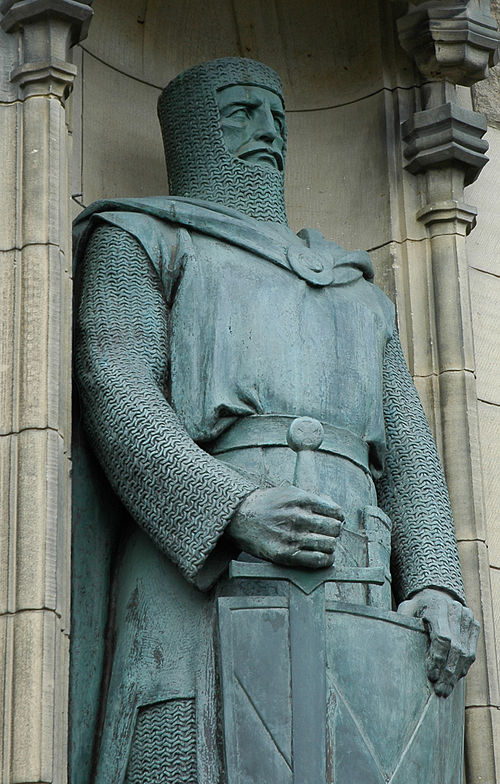
Statue of Wallace at Edinburgh Castle

Wallace statue by D. W. Stevenson on the Scottish National Portrait Gallery, Edinburgh
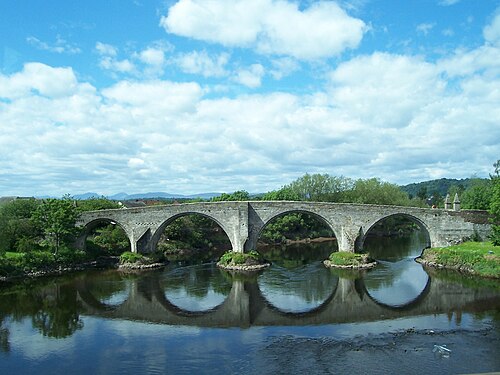
The later Stirling Bridge
Hanged, drawn and quartered
Videos
To be hanged, drawn and quartered was a method of capital punishment used principally to execute men convicted of high treason in medieval and early modern Britain and Ireland. Convicted traitors were
William Wallace
…of Falkirk in July 1298. In August 1305, Wallace was captured in Robroyston, near Glasgow, and handed over to King Edward I of England, who had him hanged, drawn and quartered for high treason and crimes against English civilians. Since his death, Wallace has obtained a legendary status beyond his homeland. He is the protagonist…

The execution of Hugh Despenser the Younger, as depicted in the Froissart of Louis of Gruuthuse

As illustrated in Matthew Paris's Chronica Majora, William de Marisco is drawn to his execution behind a horse.

Edward I Longshanks, King of England (1272–1307)

Edward III, under whose rule the Treason Act 1351 was enacted. It defined in law what constituted high treason.