William the Silent
Videos
William the Silent or William the Taciturn, more commonly known in the Netherlands as William of Orange and in the Dutch national anthem as William of Nassau, was the leader of the Dutch revolt agains
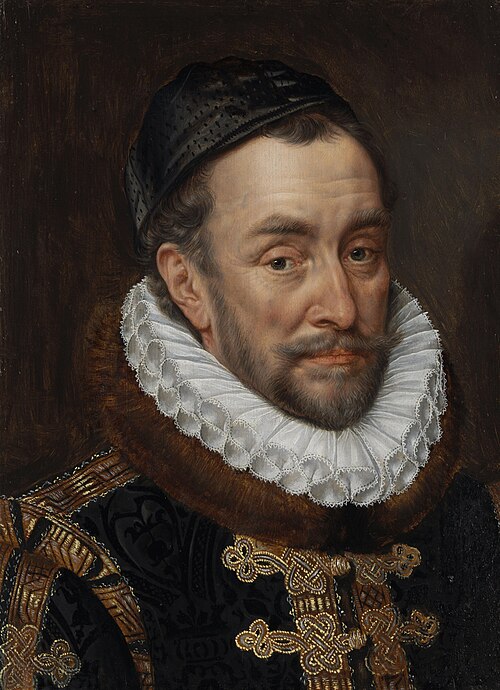
Portrait by Adriaen Thomasz. Key, c. 1570–1584

Philip II of Spain berating William the Silent by Cornelis Kruseman

The triumphal entry of the Prince of Orange in Brussels. Print from The Wars of Nassau by Frans Hogenberg.

William the Silent by Willem Jacobsz Delff (1623)
House of Orange-Nassau
Videos
The House of Orange-Nassau, also known as the House of Orange or rarely the Fourth House of Orange in comparison with the other noble houses that held the Principality of Orange, is the current reigni
William the Silent
…formal independence of the United Provinces in 1648. Born into the House of Nassau, he became Prince of Orange in 1544 and is thereby the founder of the Orange-Nassau branch and the ancestor of the monarchy of the Netherlands. A wealthy nobleman, William originally served the Habsburgs as a member of the court of Margaret…
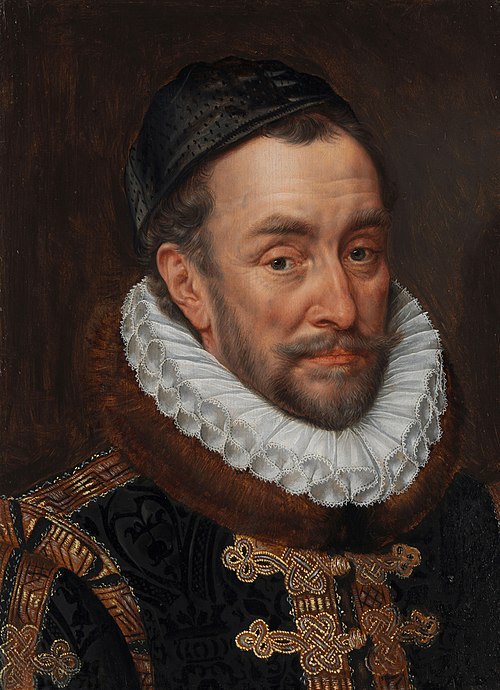
William the Silent, Prince of Orange, leader of the Dutch Revolt, and stadholder of Holland, Zeeland, and Utrecht by Adriaen Thomasz. Key, c. 1580
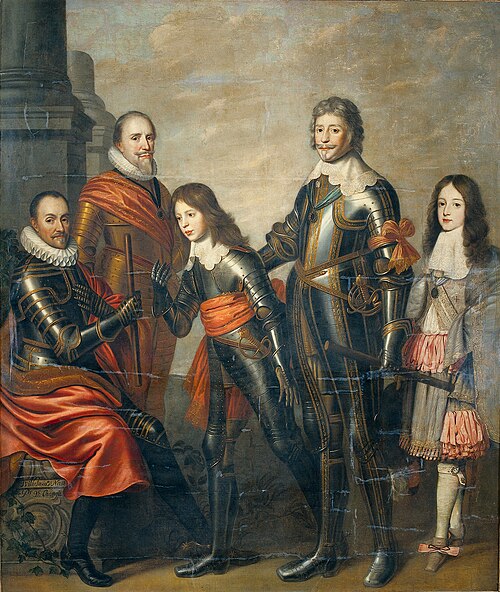
Painting by Willem van Honthorst (1662), diachronically depicting four generations of Princes of Orange: William I, Maurice and Frederick Henry, William II, and William III.

Willem II (1626–50), prince of Orange, and his wife Mary Stuart, Princess of Orange (1631–60).

The collateral house of Nassau: the four brothers of Willem I, prince of Orange: Jan (1536–1606), sitting, Hendrik (1550–1574), Adolf (1540–1568) and Lodewijk (1538–1574), counts of Nassau.