In the early modern period, from about 1400 to 1775, about 100,000 people were prosecuted for witchcraft in Europe and British America. Between 40,000 and 60,000 were executed, almost all in Europe. T
The torture used against accused witches, 1577


Title page of the seventh Cologne edition of the Malleus Maleficarum, 1520 (from the University of Sydney Library). The Latin title is "MALLEUS MALEFICARUM, Maleficas, & earum hæresim, ut phramea potentissima conterens." (Generally translated into English as The Hammer of Witches which destroyeth Witches and their heresy as with a two-edged sword).

The burning of a French midwife in a cage filled with black cats

The Witch, No. 1, c. 1892 lithograph by Joseph E. Baker
Witchcraft
Videos
Witchcraft is the use of magic by a person called a witch. Traditionally, "witchcraft" means the use of magic to inflict supernatural harm or misfortune on others, and this remains the most common and
Witch trials in the early modern period
…In the early modern period, from about 1400 to 1775, about 100,000 people were prosecuted for witchcraft in Europe and British America. Between 40,000 and 60,000 were executed, almost all in Europe. The witch hunts were particularly severe in parts of the…
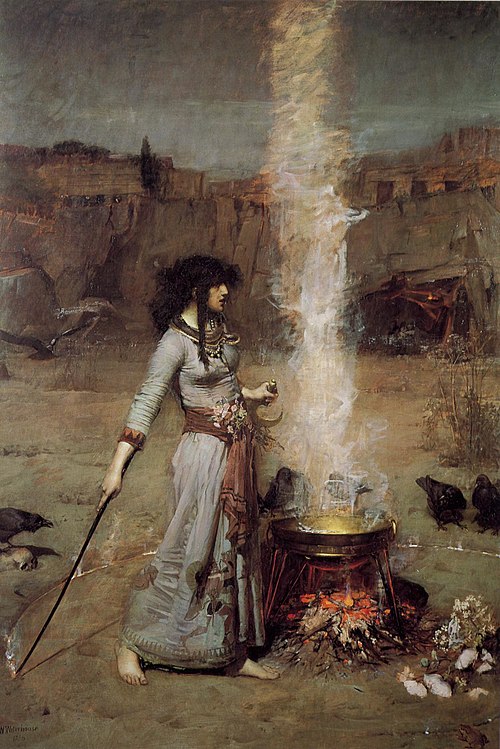
Depiction of witchcraft in John William Waterhouse's painting The Magic Circle (1886)

The Witches by Hans Baldung (woodcut), 1508

Preparation for the Witches' Sabbath by David Teniers the Younger. It shows a witch brewing a potion overlooked by her familiar spirit or a demon; items on the floor for casting a spell; and another witch reading from a grimoire while anointing the buttocks of a young witch about to fly upon an inverted besom.

Diorama of a cunning woman or wise woman in the Museum of Witchcraft and Magic