Woman Suffrage Procession
Videos
The Woman Suffrage Procession on March 3, 1913, was the first suffragist parade in Washington, D.C. It was also the first large, organized march on Washington for political purposes. The procession was organized by the suffragists Alice Paul and Lucy Burns for the National American Woman Suffrage Association (NAWSA). Planning for the event began in Washington in December 1912. As stated in its official program, the parade's purpose was to "march in a spirit of protest against the present political organization of society, from which women are excluded."
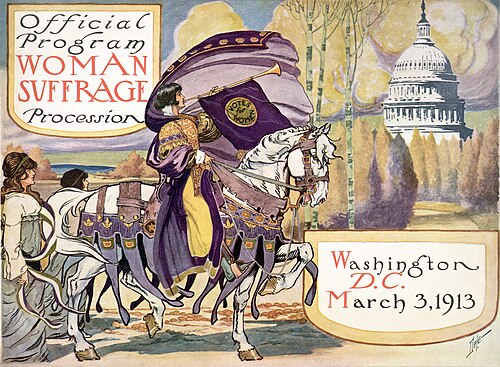
Official program for the Woman Suffrage Procession in Washington, D.C., March 3, 1913

Members of the Congressional Committee of the NAWSA. Back row, second from left is Nina Allender; second from right is Hazel MacKaye; far right Elsie Hill. Front row (L to R): Glenna Tinnin, Helen Gardener, Alice Paul, Elizabeth Thatcher Kent, and Genevieve Stone.

The Just Government League of Maryland marching with a variation of the Gadsden flag.

Inez Milholland led the procession.
The National American Woman Suffrage Association (NAWSA) was an organization formed on February 18, 1890, to advocate in favor of women's suffrage in the United States. It was created by the merger of two existing organizations, the National Woman Suffrage Association (NWSA) and the American Woman Suffrage Association (AWSA). Its membership, which was about seven thousand at the time it was formed, eventually increased to two million, making it the largest voluntary organization in the nation. It played a pivotal role in the passing of the Nineteenth Amendment to the United States Constitution, which in 1920 guaranteed women's right to vote.

Gardener, Park and Catt at Suffrage House in Washington, D.C.

Image: 128front
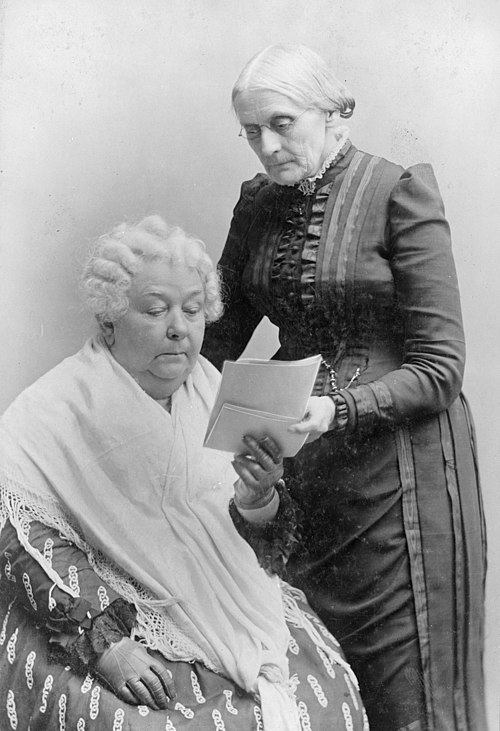
Elizabeth Cady Stanton (seated) with Susan B. Anthony in the late 19th century

Susan B. Anthony and Alice Stone Blackwell signed NAWSA check, written by the group's treasurer Harriet Taylor Upton, payable to Rachel Foster Avery