Women in dance
Videos
The important place of women in dance can be traced back to the origins of civilization. Cave paintings, Egyptian frescos, Indian statuettes, ancient Greek and Roman art and records of court traditions in China and Japan all testify to the important role women played in ritual and religious dancing from the start. In the Middle Ages, what has become known as ballet had its beginnings in Italian court festivals when women frequently played the parts of men. It was however in late 17th-century France that the Paris Opera produced the first celebrated ballerinas. While women began to dominate the ballet scene in the 18th century, it was with the advent of Romantic ballet in the 19th century that they became the undisputed centre of attraction with stars playing the leading roles in the works of Marius Petipa, appearing in theatres across Europe from Milan's La Scala to the Mariinsky Theatre in Saint Petersburg. More recently, women have played a leading role in developing various forms of modern dance including flamenco and expressionist dance.


Dancing women, El Cogul caves, Lérida
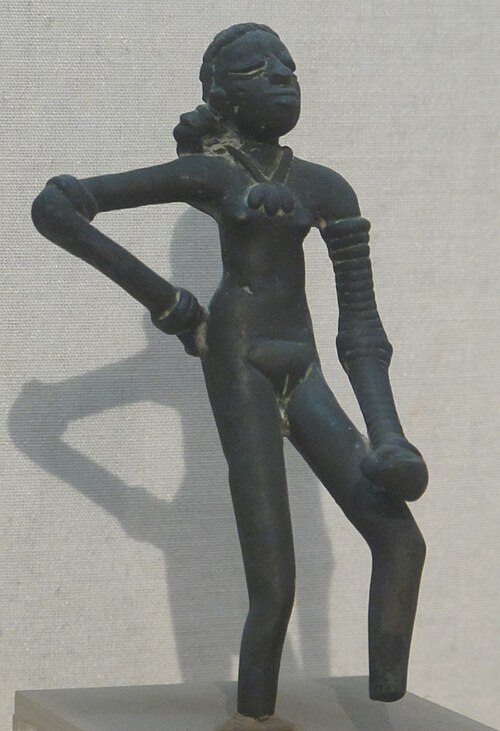
Dancing girl statuette from Mohenjo-daro, 2500-1500 BC

Ancient Egyptian dancer, c. 1200 BC
Anna Pavlova
Videos
Anna Pavlovna Pavlova was a Russian prima ballerina of the late 19th and the early 20th centuries. She was a principal artist of the Imperial Russian Ballet and the Ballets Russes of Sergei Diaghilev. Pavlova is most recognized for her creation of the role of The Dying Swan and, with her own company, became the first ballerina to tour around the world, including performances in South America, India, Mexico and Australia.


Students of the Imperial Ballet School, St. Petersburg, in Marius Petipa's Un conte de fées. A ten-year-old A Pavlova (kneeling on left, holding birdcage) appeared in her first ever ballet performance. 1891.

Caricature of Pavlova as Nikiya in La Bayadère by the brothers Nikolai Legat and Sergei Legat for their book The Russian Ballet In Caricatures. 1903
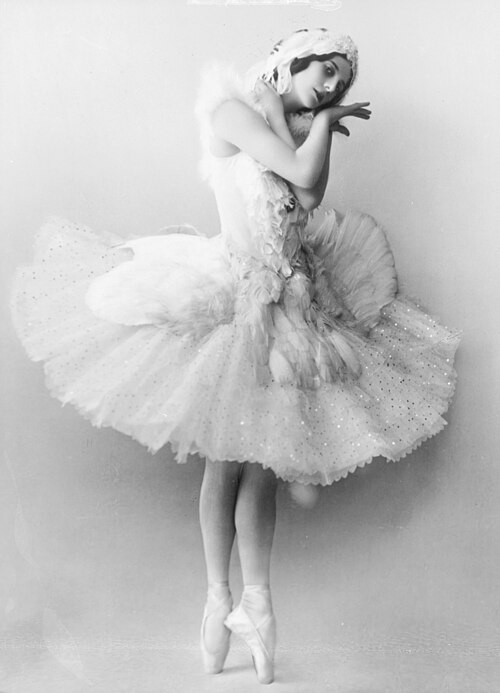
Anna Pavlova in the Fokine/Saint-Saëns The Dying Swan, Saint Petersburg, 1905