Woolwich Dockyard
Videos
Woolwich Dockyard was an English naval dockyard along the river Thames at Woolwich—originally in north-west Kent, now in southeast London—where many ships were built from the early 16th century until

Clock House (Dockyard offices, 1783–1784), the earliest surviving building on the Woolwich Dockyard site)

c. 1575 illustration of Henri Grâce à Dieu, launched at Woolwich Dockyard in 1514.

Woolwich Dockyard in 1698: the recently erected Great Storehouse (centre-right) dominates the built environment of the dockyard.

Old Woolwich as viewed from the river in 1739: Bell Water Gate is in the centre and the Gun Wharf centre-left. The clock tower (left) is part of the Ropeyard. (From an engraving by S & N Buck)
Royal Navy Dockyard
Videos
Royal Navy Dockyards were state-owned harbour facilities where ships of the Royal Navy were built, based, repaired and refitted. Until the mid-19th century the Royal Dockyards were the largest industr
Woolwich Dockyard
…Woolwich Dockyard (formally H.M. Dockyard, Woolwich, also known as The King's Yard, Woolwich) was an English naval dockyard along the river Thames at Woolwich—originally in north-west Kent, now in southeast London—where many ships were built from the early 16th century until…
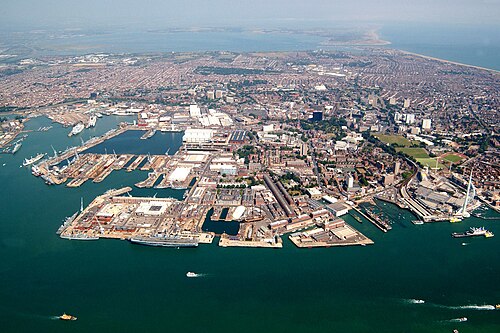
Portsmouth Royal Dockyard, founded 1496, still in service as a Naval Base.

Careening wharf and storehouses built by the Royal Navy in the 1760s, Illa Pinto, Port Mahon, Menorca.

18th-century storehouse, 19th-century dry dock and 20th-century warship preserved at Chatham

Barracks accommodation alongside No.5 Basin and the former coaling wharf at Devonport