Wright Flyer III
Videos
The Wright Flyer III is the third powered aircraft by the Wright Brothers, built during the winter of 1904–05. Orville Wright made the first flight with it on June 23, 1905. The Wright Flyer III had a

The Wright Flyer III over Huffman Prairie, October 4, 1905 during its 46th flight. The front of the airplane is at the top of the photo.

Flyer III in the museum

The Wright Flyer III in its two-seat configuration at Kill Devil Hills, North Carolina, in May 1908. Take-offs were made from the monorail launch track; the catapult and derrick were not used. This is the only surviving Wright brothers photo of the airplane in this configuration. A news photographer took a picture of the aircraft in flight from a distance, but very few details are visible.

The start of the first flight of Flyer III, June 23, 1905, Orville at the controls. The catapult tower, which they began using in September 1904, is at right, photographed for the first time. It helped accelerate the aircraft to takeoff speed. The Flyer looks virtually identical to the previous two powered versions, but noticeably different from its later appearance, after the Wrights extended and enlarged the elevator and rudder. According to the Library of Congress: "The two figures in the center are probably Wilbur Wright and
Wright brothers
Videos
The Wright brothers, Orville Wright and Wilbur Wright, were American aviation pioneers generally credited with inventing, building, and flying the world's first successful airplane. They made the firs
Wright Flyer III
…The Wright Flyer III is the third powered aircraft by the Wright Brothers, built during the winter of 1904–05. Orville Wright made the first flight with it on June 23, 1905. The Wright Flyer III had an airframe of spruce…

Orville Wright 1905 crop
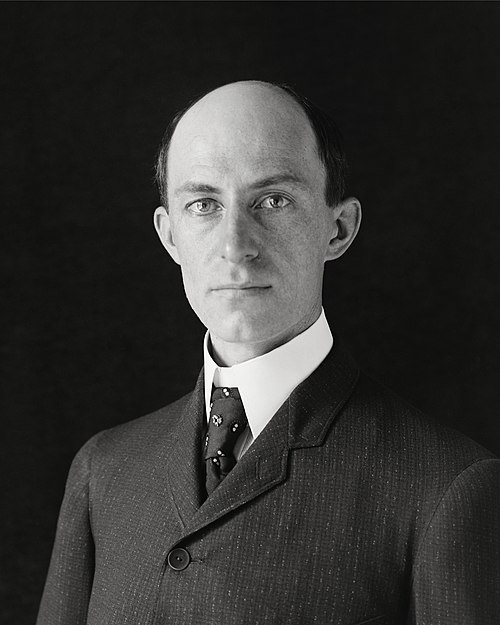
Wilbur Wright crop

Wright brothers' home at 7 Hawthorn Street, Dayton, c. 1900. Wilbur and Orville built the covered wrap-around porch in the 1890s.

The Wright brothers' bicycle at the National Air and Space Museum