Wrightville was a mining village in the Orana region of New South Wales, Australia. Once it was a significant settlement, with its own municipal government, public school, convent school, post office, police station, four hotels, and railway connection. At its peak, around 1907, its population probably reached 2,000 people. Its site and that of the adjacent former village of Dapville are now an uninhabited part of Cobar.
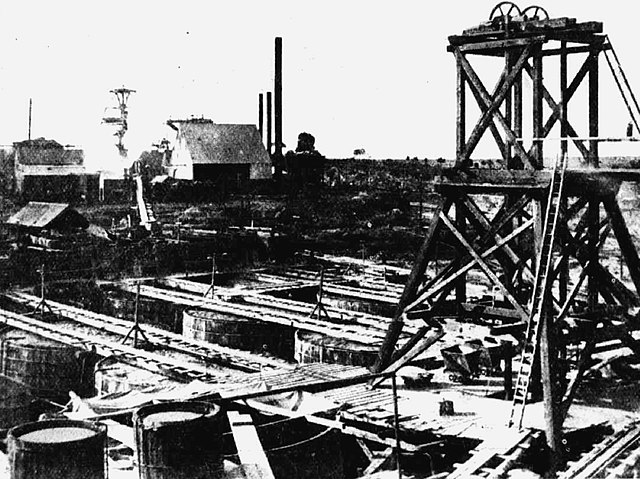
The Occidental Mine (c.1911), the main source of Wrightville's prosperity.
Chesney Mine c.1899 (Carne)
Eight hour day procession, in Hunt Street, Wrightville, 1 Oct. 1900 (State Library of NSW)
Children of Wrightville Public School dressed in national costumes, for a visit to their school by the Governor of New South Wales, Sir Harry Rawson, on 22 May 1907. There were also 111 children at the village's convent school, in 1906.
Cobar is a town in central western New South Wales, Australia whose economy is based mainly upon base metals and gold mining. The town is 712 km (442 mi) by road northwest of the state capital, Sydney. It is at the crossroads of the Kidman Way and Barrier Highway. The town and the local government area, the Cobar Shire, are on the eastern edge of the outback. At the 2016 census, the town of Cobar had a population of 3,990. The Shire has a population of approximately 4,700 and an area of 44,065 square kilometres (17,014 sq mi).
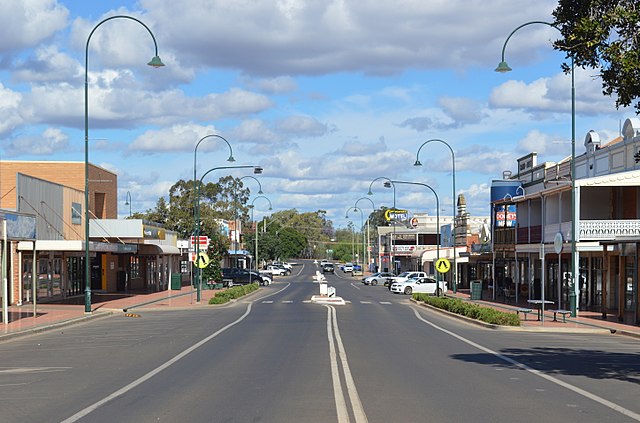
Marshall Street, the main street of Cobar. Cobar retains much of its late 19th-century architecture.
New Cobar Open Cut Mine
Great Cobar Copper Mining Syndicate's Refinery, Lithgow
Miners Heritage Park, Cobar