Xenophon
Videos
Xenophon of Athens was a Greek military leader, philosopher, and historian. At the age of 30, he was elected as one of the leaders of the retreating Greek mercenaries, the Ten Thousand, who had been p
Bust statue of Xenophon, dated to 120 AD (Roman period).


Route of Xenophon and the Ten Thousand (red line) in the Achaemenid Empire. The satrapy of Cyrus the Younger is delineated in green.
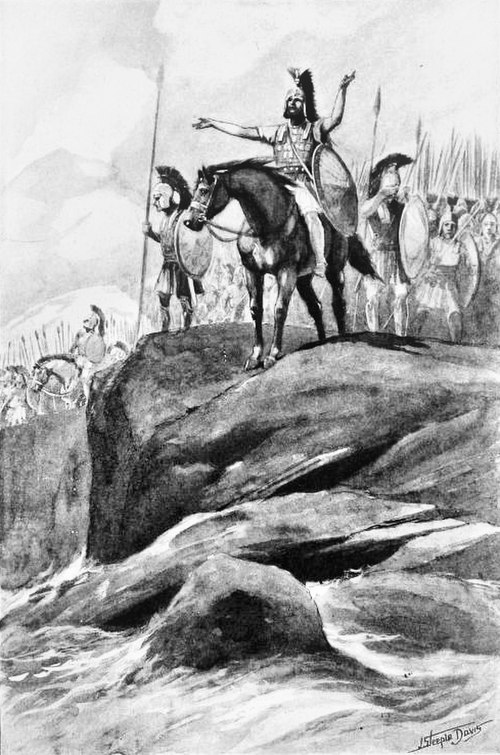
19th-century illustration of Xenophon leading his Ten Thousand through Persia to the Black Sea

Xenophon's Anabasis
Anabasis (Xenophon)
Videos
Anabasis is the most famous work of the Ancient Greek professional soldier and writer Xenophon. It gives an account of the expedition of the Ten Thousand, an army of Greek mercenaries hired by Cyrus t
Xenophon
…the Spartan king Agesilaus and the Constitution of the Lacedaemonians. The sub-satrap Mania is primarily known through Xenophon's writings. Xenophon's Anabasis recounts his adventures with the Ten Thousand while in the service of Cyrus the Younger, Cyrus's failed campaign to claim the Persian throne from…

Xenophon's Anabasis, translated by Carleton Lewis Brownson.

Xenophon.

Retreat of the Ten Thousand at the Battle of Cunaxa, by Jean Adrien Guignet. Louvre.