Yeomanry Cavalry
Videos
Photos
The Yeomanry Cavalry was the mounted component of the British Volunteer Corps, a military auxiliary established in the late 18th century amid fears of invasion and insurrection during the French Revolutionary Wars. A yeoman was a person of respectable standing, one social rank below a gentleman, and the yeomanry was initially a rural, county-based force. Members were required to provide their own horses and were recruited mainly from landholders and tenant farmers, though the middle class also featured prominently in the rank and file. Officers were largely recruited from among the nobility and landed gentry. A commission generally involved significant personal expense, and although social status was an important qualification, the primary factor was personal wealth. From the beginning, the newly rich, who found in the yeomanry a means of enhancing their social standing, were welcomed into the officer corps for their ability to support the force financially. Urban recruitment increased towards the end of the 19th century, reflected in the early 20th century by increasingly common use of hired mounts.

Yeomanry Cavalryman in a 1798 painting by Thomas Rowlandson

Fearing that the yeomanry would provoke confrontation, the fledgling police force was, where available, used in preference to maintain order during the Chartist disturbances.

Yeomanry Cavalry of the late 19th century
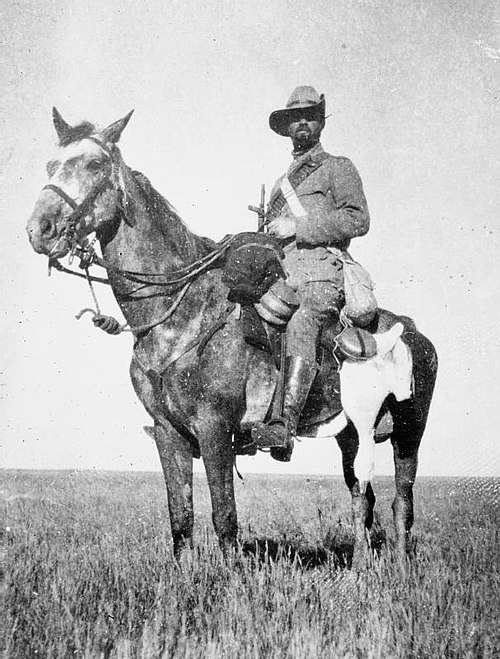
Imperial yeoman
Militia (Great Britain)
Videos
Photos
The British Militia was the principal military reserve force of the Kingdom of Great Britain. Militia units were repeatedly raised in Great Britain during the Georgian era for internal security duties and to defend against external invasions. The Militia Act 1757, passed by the Parliament of Great Britain after the outbreak of the Seven Years' War, led to the rapid expansion of the British Militia in order to defend from potential French invasions. In the Kingdom of Ireland, a client state of Great Britain, the equivalent force was the Irish Militia, which saw heavy service in the Irish Rebellion of 1798 alongside British militia units. The existence of militia units in Great Britain and Ireland played an important role in freeing regular troops from the British and Irish establishments for overseas service.

Members of the Norfolk Militia undergoing musket training in 1759

An officer of the Norfolk Militia in 1759

John Campbell, 4th Duke of Argyll