Yibbum
Videos
Yibbum is the form of levirate marriage found in Judaism. As specified by Deuteronomy 25:5–10, the brother of a man who died without children is permitted and encouraged to marry the widow. However, i
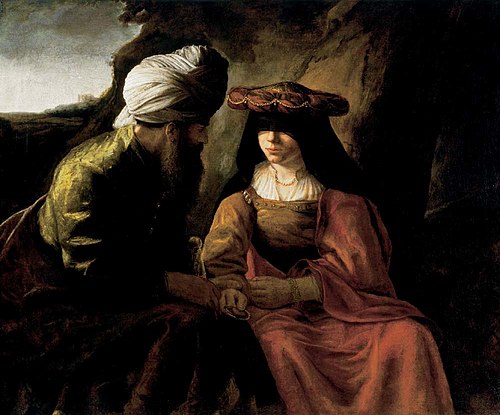
Judah and Tamar, by school of Rembrandt (1650s). An early example of a levirate-type practice is the biblical story of Judah and Tamar

The Widow (1882-83) by Anders Zorn. The widow has to remain unmarried until yibbum or halizah has been performed.

19th century Ketuba or Yibbum from New Zealand, including a promise to take care of the bride if the husband dies before any children are born.
Book of Ruth
Videos
The Book of Ruth is part of the third and final division—the "Writings" —of the Hebrew Bible. In common printed Hebrew Bible ordering, the book appears between Song of Songs and the book of Lamentatio
Yibbum
…in Deuteronomy, as Onan was the brother of Tamar's deceased husband Er. Another example of an analogous arrangement to yibbum is recounted in the Book of Ruth. After the death of her husband, Ruth is noticed and welcomed by her husband's kinsman, Boaz. After Ruth is rejected by an anonymous Ploni Almoni, Boaz…

Naomi entreating Ruth and Orpah to return to the land of Moab by William Blake, 1795

Hebrew text of Ruth

"The Gleaners", an engraving illustrating the Book of Ruth by Gustave Doré (1832–1883)

End of the book of Ruth in the Damascus Crown, a 1260 manuscript written in Burgos, Spain.