Zengid dynasty
Videos
The Zengid dynasty was a Turkoman Sunni Muslim dynasty in the Middle East. Initially an Atabegate of the Seljuk Empire created in 1127, it ruled parts of the Levant and Upper Mesopotamia, and eventual
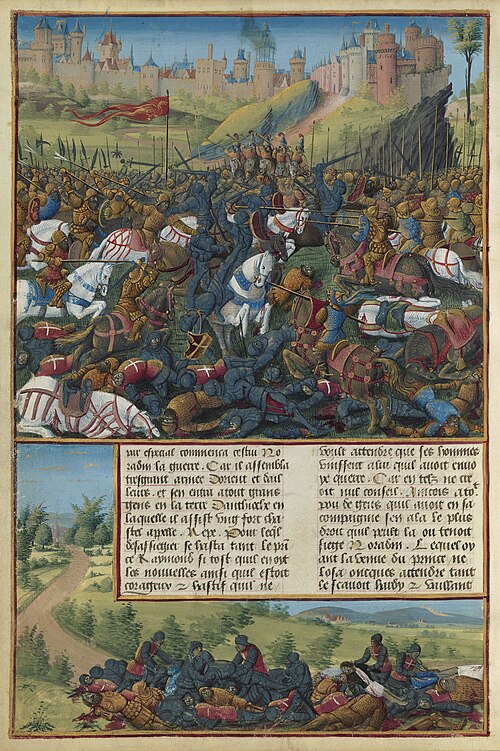
Nūr-ad-Din's victory at the Battle of Inab, 1149. Illustration from the Passages d'outremer, c. 1490.

Hunting scene on the Blacas ewer, 1232, Mosul, Zengid dynasty.

Saladin began his military career in the army of Nur ad-Din, during the Zengid conquest of Egypt in 1163–1169.

Zengid soldiers armed with long swords and wearing the aqbiya turkiyya coat, tiraz armbands, boots and sharbush hat, at the time of the atabegate of Badr al-Din Lu'lu' in 1218–1219. Kitab al-Aghani, Mosul.
Ayyubid dynasty
Videos
The Ayyubid dynasty, also known as the Ayyubid Sultanate, was a Sunni Muslim dynasty of Kurdish origin that founded the medieval Sultanate of Egypt, which was established by Saladin in 1171, following
Zengid dynasty
…its last Emir Mahmud al-Malik al-Zahir (1241–1250, son of Mu'izz al-Din Mahmud). In 1250, al-Jazira fell under the domination of An-Nasir Yusuf, the Ayyubid emir of Aleppo, marking the end of Zengid rule. The next period would be marked by the arrival of the Mongols: in 1262 Mosul was sacked by the Mongols…
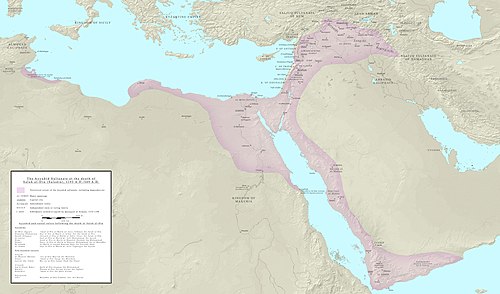
Ayyubid Sultanate of Egypt (in pink) at the death of Saladin in 1193

Fatimid or Ayyubid dynasty battle scene, Fustat, Cairo, Egypt, 12–13th century.

Arabic trebuchet, with its counterweight, in the Tabṣira by Murḍi Ibn cālī Ibn Murḍi al-Ṭarsūsī written for Saladin, late Fāṭimid or early Ayyūbid Egypt, c.1170 CE (Ms. Hunt.264, f.117, Bodleian Library, Oxford, UK). This is the only manuscript directly attributable to the Ayyubids, although early manuscripts such as the Kalīla wa-Dimna (BNF Arabe 3465) are also generally considered as Ayyubid.