Zeno (emperor)
Videos
Zeno was Eastern Roman emperor from 474 to 475 and again from 476 to 491. His reign was plagued by domestic revolts and religious dissension, but was more successful on the foreign front. He is credit
A detail of the Missorium of Aspar, depicting the powerful magister militum Aspar and his elder son Ardabur (c. 434). Zeno caused Ardabur's fall, producing treacherous letters that linked him to the Sassanid King; Ardabur later bribed some of Zeno's soldiers into trying to kill him.


Relief of Ariadne, elder daughter of Emperor Leo I and wife of Zeno
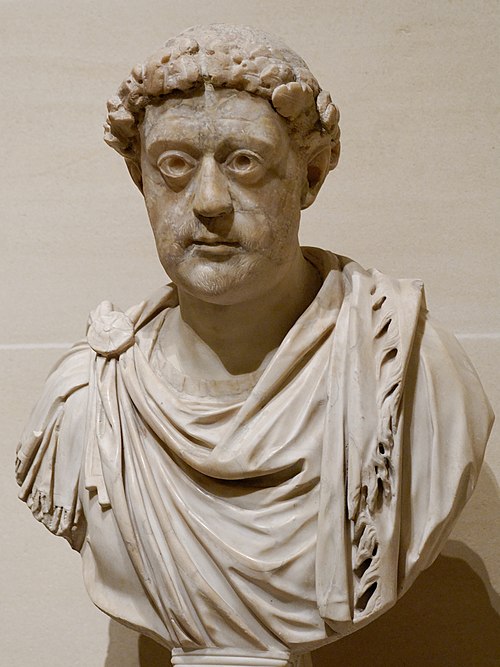
Leo I, father-in-law of Zeno, Eastern Roman Emperor from 457 to 474

Coin of Basiliscus, who revolted against Zeno in January 475 and held power until Zeno's return in August 476. Basiliscus was Verina's brother; he took power after having Zeno flee from Constantinople, but alienated the people of Constantinople and was captured and put to death by Zeno.
The fall of the Western Roman Empire, also called the fall of the Roman Empire or the fall of Rome, was the loss of central political control in the Western Roman Empire, a process in which the Empire
Zeno (emperor)
…474. Julius was on good terms with Zeno, and he even minted coins in the names of Zeno, Leo II and himself. Europe and the Mediterranean Basin at the fall of the Western Roman Empire in 476 In August 475, during Basiliscus's reign, while Zeno was in Isauria blocked by Illus's army, Orestes, the western magister militum, revolted…

An ivory diptych, thought to depict Stilicho (right) with his wife Serena and son Eucherius, ca. 395 (Monza Cathedral)

A contemporary depiction of Honorius on a consular diptych issued by Anicius Petronius Probus to celebrate Probus's consulship in 406, now in the Aosta museum

Chi-rho pendant of Empress Maria, daughter of Stilicho, and wife of Honorius, now in the Louvre, Paris. The pendant reads, around a central cross (clockwise): HONORI MARIA SERHNA VIVATIS STELICHO. The letters form a Christogram.

Inscription honouring Honorius, as florentissimo invictissimoque, the most excellent and invincible, 417–418, Forum Romanum