Zoomorphism
Videos
In the context of art, zoomorphism describes art that imagines humans as non-human animals. It can also be defined as art that portrays one species of animal like another species of animal, or art tha
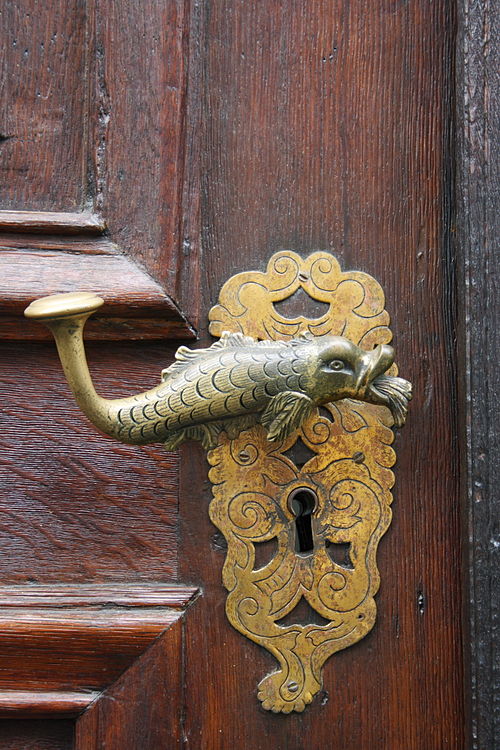
Fish-shaped door handle from Germany, an example of a zoomorphic artwork

The 'Cockerel' diadem, from Calouste Gulbenkian Museum (Lisbon, Portugal), made between 1897 and 1898 by René Lalique
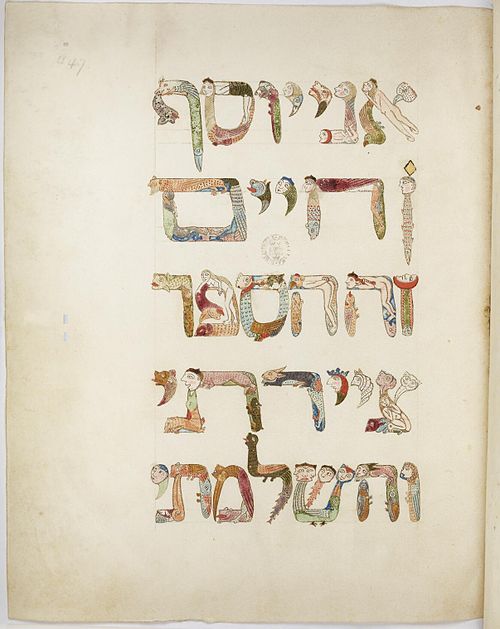
Zoomorphic and anthropomorphic letters in the Kennicott Bible

Incense Burner of Amir Saif al-Dunya wa’l-Din ibn Muhammad al-Mawardi, dated A.H. 577/ A.D. 1181–82, created by Ja`far ibn Muhammad ibn `Ali, made of bronze; cast, engraved, chased, pierced, H: 33 1/2 in. L: 32 1/2 in. W: 9 in.
Shapeshifting
Videos
In mythology, folklore and speculative fiction, shapeshifting is the ability to physically transform oneself through unnatural means. The idea of shapeshifting is found in the oldest forms of totemism
Zoomorphism
…that uses animals as a visual motif, sometimes referred to as "animal style". It is also similar to the term 'therianthropy', which is the ability to shapeshift into animal form, except that with zoomorphism the animal form is applied to a physical object. It broadly means to attribute animal forms or animal…

Zeus turning Lycaon into a wolf, engraving by Hendrik Goltzius
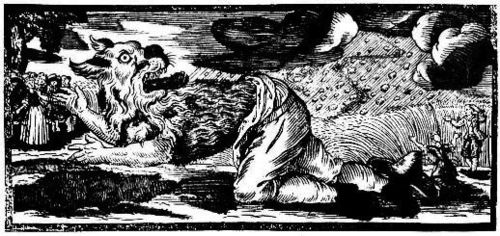
1722 German woodcut of a werewolf transforming

Vertumnus, in the form of an old woman, wooing Pomona, by Gerbrand van den Eeckhout.

Gianlorenzo Bernini, Apollo pursuing an unwilling Daphne who transforms into a laurel tree