Zori
Videos
Zori, also rendered as zōri, are thonged Japanese sandals made of rice straw, cloth, lacquered wood, leather, rubber, or—most commonly and informally—synthetic materials. They are a slip-on descendant

Setta, a type of zori

Zori were traditionally made at home, as were waraji. Note twine warp, held between hands and toes, and loose-fiber weft, to his right.

Pictorial instructions on how to weave wara-zōri or waraji in Hida Minzoku Mura Folk Village; woven footwear is uncommonly produced, especially for practical necessity, in Japan in the present day.

Similar roughly-woven festival zori, but with the straps wrapped in fabric before being twisted together
Waraji
Videos
Waraji are light tie-on sandals, made from ropemaking fibers, that were the standard footwear of the common people in Japan.
Zori
…rice straw, cloth, lacquered wood, leather, rubber, or—most commonly and informally—synthetic materials. They are a slip-on descendant of the tied-on waraji sandal. Similar in form, modern flip-flops became popular in the United States, Australia and New Zealand when soldiers returning from World War II…
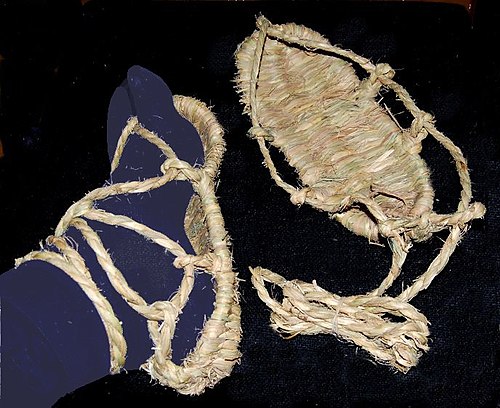
Waraji over indigo-blue tabi, the sock colour digitally altered for clarity

Similar four- and six-warp Chinese sandals, c. 1930 (other views)