Zossen documents
Videos
The Zossen documents were a clandestine collection of materials assembled over more than a decade by members of the German military resistance to Adolf Hitler, stored in a safe at the Oberkommando des
Wehrmacht general Hans Oster, co-architect of the Zossen archive and head of its military planning

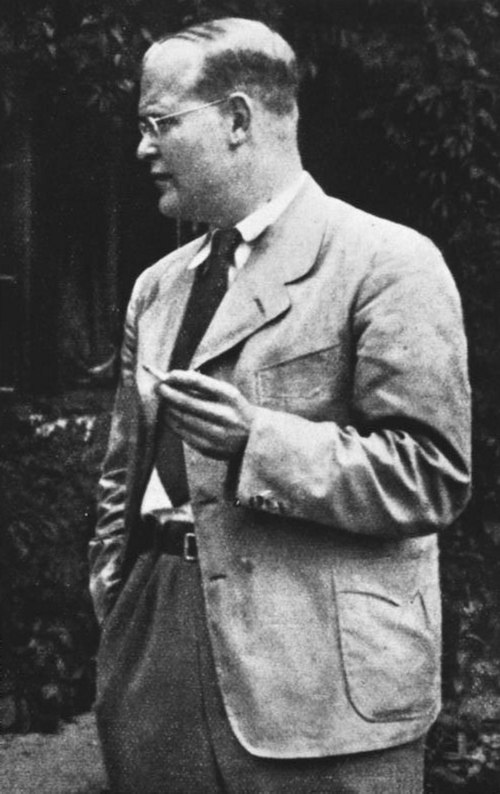
Lutheran pastor Dietrich Bonhoeffer, whose resistance activities and ecumenical contacts featured among the Zossen archive's holdings

Flossenbürg concentration camp memorial plaque honoring German resistance members executed on 9 April 1945; Dohnanyi's name is notably missing, as he was brought to Flossenbürg from a police hospital in Berlin and executed separately, possibly at a different location within or near the camp complex, and the precise circumstances of his execution remain less fully documented than those of the others.

Schloss Mittersill in the Austrian Alps, where Kaltenbrunner oversaw the destruction of the Zossen documents
Wilhelm Canaris
Videos
Wilhelm Franz Canaris was a German admiral and the chief of the Abwehr from 1935 to 1944. Initially a supporter of Adolf Hitler and the Nazi Party, Canaris turned against Hitler and committed acts of
Zossen documents
…on 22 September 1944 in the aftermath of the 20 July plot, the documents implicated a widening circle of conspirators; the discovery of Abwehr chief Wilhelm Canaris's personal diary (replete with additional incriminating content) in April 1945 intensified Hitler's resolve to punish the conspirators. Following a…

Canaris in 1940

Canaris (second row, second from right) with other officers of the Marinekommandoamt (Naval Command Office), 1923

Canaris as a Korvettenkapitän, 1924–31

South African Minister of Defence Oswald Pirow walking in front of an honor guard during his visit to Berlin, to his left is Canaris, November 1938