Yudhishthira
Videos
Yudhishthira also known as Dharmaraja, was the king of Indraprastha and later the Kuru Kingdom in ancient Indian History and the eldest among the five Pandava brothers, he is also one of the central figures of the ancient Hindu epic Mahabharata.

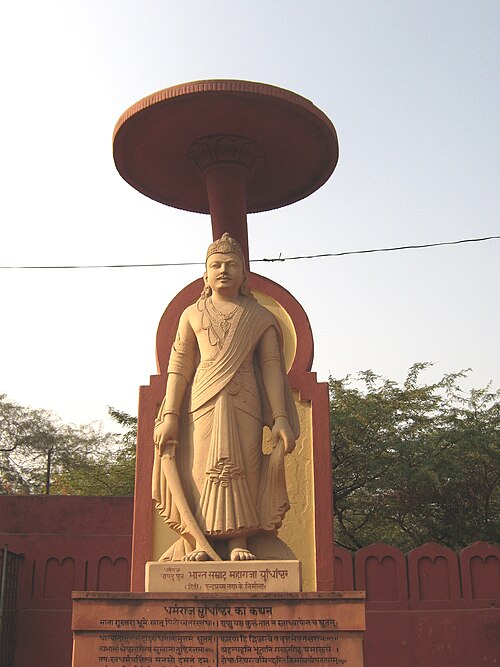
Statue of Yudhishthira
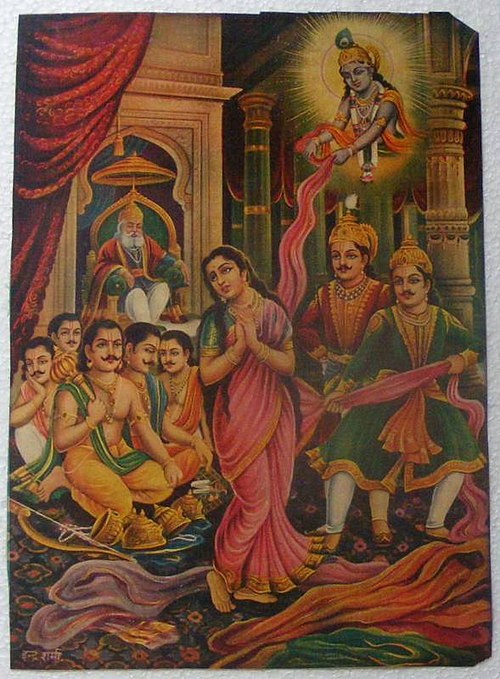
Draupadi's disrobing at game of dice

Yudhisthira answering the questions of Yaksha
Dharma
Videos
Dharma is a key concept with multiple meanings in the Indian religions, among others. Although no single-word translation exists for dharma in English, the term is commonly understood as referring to behaviours that are in harmony with the "order and custom" that sustain life; "virtue", or "religious and moral duties".


Sannyasa and stages of life

The Prakrit word "dha-ṃ-ma"/𑀥𑀁𑀫 (Sanskrit: Dharma धर्म) in the Brahmi script, as inscribed by Emperor Ashoka in his Edicts of Ashoka (3rd century BCE)
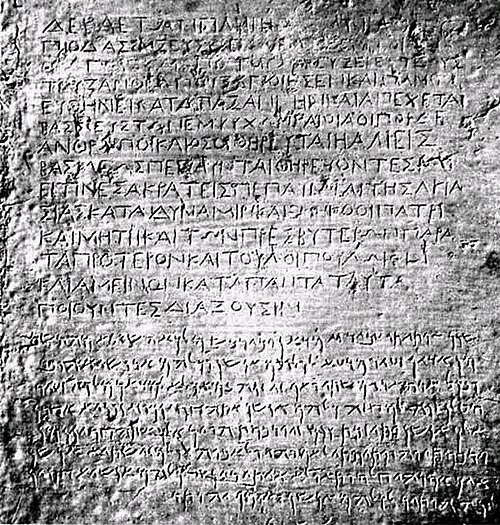
The Kandahar Bilingual Rock Inscription is from Indian Emperor Asoka in 258 BCE, and found in Afghanistan. The inscription renders the word dharma in Sanskrit as eusebeia in Greek, suggesting dharma in ancient India meant spiritual maturity, devotion, piety, duty towards and reverence for human community.