Ākāśagarbha
Videos
Ākāśagarbha is a bodhisattva in Chinese, Japanese and Korean Buddhism who is associated with the great element of space.
Painting of Ākāśagarbha, Japan, 13th century


Akasagarbha at Buddha Tooth Relic Temple and Museum in Chinatown, Singapore

Ākāśagarbha statue in Jingo-ji, Japan. 9th century

Ākāśagarbha at Tōdai-ji, Nara Prefecture, Japan
Kūkai
Videos
Kūkai, born Saeki no Mao posthumously called Kōbō Daishi, was a Japanese Buddhist monk, calligrapher, and poet who founded the esoteric Shingon school of Buddhism. He travelled to China, where he stud
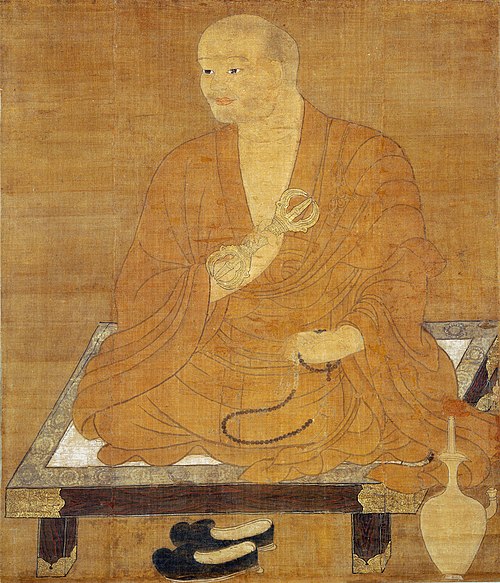
Painting of Kūkai from the Shingon Hassozō, a set of scrolls depicting the first eight patriarchs of the Shingon school. Japan, Kamakura period (13th–14th centuries).

Kamakura-period statue of Thousand-armed Kannon at Sanjūsangen-dō in Kyoto, Japan.

Painting of Kūkai as a boy, posthumously known by the title Chigo Daishi ("The Child Grand Master"). It depicts the young Kūkai flying to heaven on a lotus, where he converses with various Buddhas. Muromachi Period, 15th century.

Wood statue of Kūkai