The 1991 eruption of Mount Pinatubo in the Philippines' Luzon Volcanic Arc was the second-largest volcanic eruption of the 20th century, behind only the 1912 eruption of Novarupta in Alaska. Eruptive
Eruption column on June 12, of 1991

Aerial view of Mount Pinatubo in June 22, 1991 a ashfall was still there before it was formation of Lake Pinatubo

Pinatubo as viewed from the north in late April 1991. Grayish-tan ash and several craters from the April 2 phreatic explosions are visible at the left.

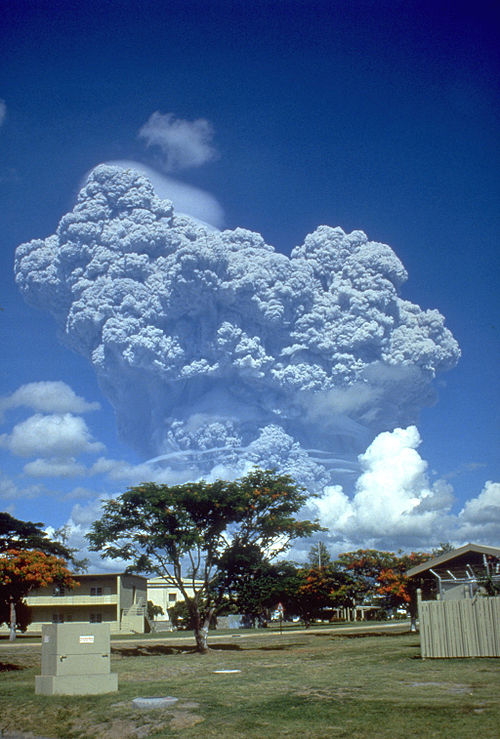
A view to the west from Clark Air Base of the major eruption of Pinatubo on June 15, 1991. The June 15–16 climactic phase lasted more than fifteen hours, sent tephra about 35 km (22 mi) into the atmosphere, generated voluminous pyroclastic flows, and left a caldera in the former summit region. Later dubbed Black Saturday, the day of darkness stretched for 36 hours.
Lahar
Videos
A lahar is a violent type of mudflow or debris flow composed of a slurry of pyroclastic material, rocky debris and water. The material flows down from a volcano, typically along a river valley.
1991 eruption of Mount Pinatubo
…jets inadvertently flew through the drifting ash cloud, sustaining about $100 million in damage. With the ashfall came darkness and the sounds of lahars rumbling down nearby river valleys. Several smaller lahars washed through the Clark Air Base, flowing across the base in enormously powerful sheets…

A lahar travels down a river valley in Guatemala near the Santa María volcano, 1989

Excavated 9th century Sambisari Hindu temple near Yogyakarta in Java, Indonesia. The temple was buried 6.5 metres under the lahar volcanic debris accumulated from centuries of Mount Merapi eruptions.

The aftermath of a lahar from the 1982 eruption of Galunggung, Indonesia

The lahar from the 1985 eruption of Nevado del Ruiz that wiped out the town of Armero in Colombia