2001 Samoan general election
Videos
General elections were held in Samoa on 2 March 2001 to determine the composition of the 13th Parliament. Four parties contested the election, including the ruling Human Rights Protection Party and th
Tuilaepa Sailele Malielegaoi 1


Tupua Tamasese Tupuola Tufuga Efi 00
Faʻamatai
Videos
Faʻamatai is the indigenous political system of Samoa, central to the organization of Samoan society. It is the traditional indigenous form of governance in both Samoas, comprising American Samoa and

Three matai, the two older men bearing the symbols of orator chief status – the fue (flywhisk made of organic sennit rope with a wooden handle) over their left shoulder. The central elder holds the orator's wooden staff (toʻotoʻo) of office and wears an ʻie toga, fine matting. The other two men wear tapa cloth with patterned design
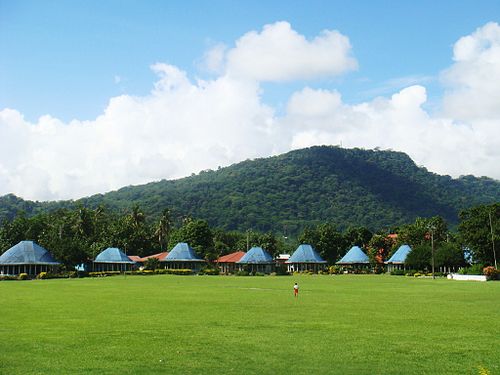
Lepea village with round meeting houses where matai meetings take place and open commons area (malae) for outdoor ceremonies.

Government Building in the capital Apia housing administrative ministerial offices.

High chief Seumanutafa Pogai of Apia, c. 1890–1910. (photo by Thomas Andrew)