Faʻamatai
Videos
Faʻamatai is the indigenous political system of Samoa, central to the organization of Samoan society. It is the traditional indigenous form of governance in both Samoas, comprising American Samoa and

Three matai, the two older men bearing the symbols of orator chief status – the fue (flywhisk made of organic sennit rope with a wooden handle) over their left shoulder. The central elder holds the orator's wooden staff (toʻotoʻo) of office and wears an ʻie toga, fine matting. The other two men wear tapa cloth with patterned design

In the architecture of Samoa there are seating areas for matai and orators according to their status, rank, role and ceremony
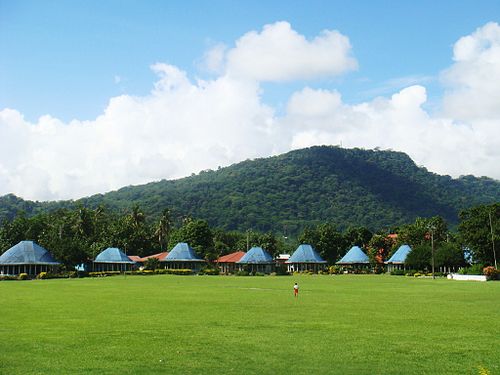
Lepea village with round meeting houses where matai meetings take place and open commons area (malae) for outdoor ceremonies.

Government Building in the capital Apia housing administrative ministerial offices.
Samoa
Videos
Samoa, officially the Independent State of Samoa, is an island country in Polynesia, a part of Oceania, which is in the South Pacific Ocean. It consists of two main islands, two smaller, inhabited isl
Faʻamatai
…central to the organization of Samoan society. It is the traditional indigenous form of governance in both Samoas, comprising American Samoa and the Independent State of Samoa. The term comprises the prefix faʻa (Samoan for "in the way of") and the word matai (family name or title). Of central importance in the system are the…

Studio photo depicting preparation of the Samoa 'ava ceremony c. 1911

Interior of Samoan house, Apia, Urville 1842

Robert Louis Stevenson's birthday fete at Vailima, 1894

Mataʻafa Iosefo (1832–1912), paramount chief and rival for the kingship of Samoa