The 2004–2008 volcanic activity of Mount St. Helens in Washington, United States was a documented continuous eruption, which occurred in the form of gradual extrusion of magma. Starting in October 200

Mount St. Helens sent a plume of volcanic ash and steam to 10,000 feet (3,000 m) above sea level in its October 1, 2004 eruption.

After releasing a cloud of steam on October 2, dust from landslides inside the crater could be observed for the rest of the afternoon.

October 5: Steam and ash eruption, seen from the Johnston Ridge Observatory.

A steam plume rises from the mountain in December 2004
Lava dome
Videos
In volcanology, a lava dome is a circular, mound-shaped protrusion resulting from the slow extrusion of viscous lava from a volcano. Dome-building eruptions are common, particularly in convergent plat
2004–2008 volcanic activity of Mount St. Helens
…documented continuous eruption, which occurred in the form of gradual extrusion of magma. Starting in October 2004 and ceasing in January 2008, a new lava dome was built up. The new dome did not rise above the rim of the crater created by the 1980 eruption of Mount St. Helens. On September 23, 2004, around…
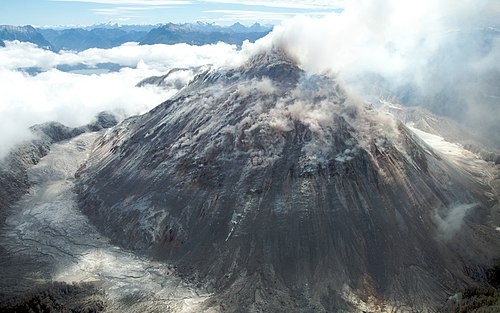
Rhyolitic lava dome of Chaitén Volcano during its 2008–2010 eruption
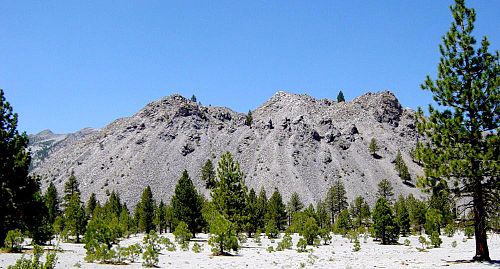
One of the Inyo Craters, an example of a rhyolite dome

Nea Kameni seen from Thera, Santorini
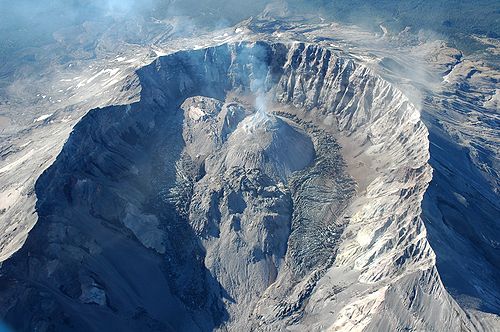
Lava domes in the crater of Mount St. Helens