2011–2013 Sudanese protests
The 2011–2013 protests in Sudan began in January 2011 as part of the Arab Spring regional protest movement. Unlike in other Arab countries, popular uprisings in Sudan had succeeded in toppling the government prior to the Arab Spring in 1964 and 1985. Demonstrations in Sudan however were less common throughout the summer of 2011, during which South Sudan seceded from Sudan, but resumed in force later that year and again in June 2012, shortly after the government passed its much criticized austerity plan.
Omar al-Bashir had been in power since he led a bloodless coup in 1989.
The Arab Spring or the First Arab Spring was a series of anti-government protests, uprisings and armed rebellions that spread across much of the Arab world in the early 2010s. It began in Tunisia in response to corruption and economic stagnation. From Tunisia, the protests then spread to five other countries: Libya, Egypt, Yemen, Syria and Bahrain. Rulers were deposed or major uprisings and social violence occurred including riots, civil wars, or insurgencies. Sustained street demonstrations took place in Morocco, Iraq, Algeria, Lebanon, Jordan, Kuwait, Oman and Sudan. Minor protests took place in Djibouti, Mauritania, Palestine, Saudi Arabia and the Moroccan-occupied Western Sahara. A major slogan of the demonstrators in the Arab world is ash-shaʻb yurīd isqāṭ an-niẓām!.
Image: Tunisia Unrest VOA Tunis 14 Jan 2011 (2)
Image: (Banyas demonstration) مظاهرات بانياس جمعة الغضب 29 نيسان 2011
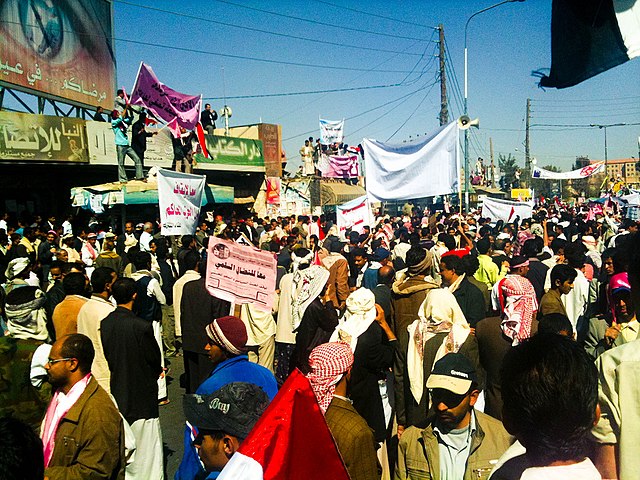
Image: Yemen protest
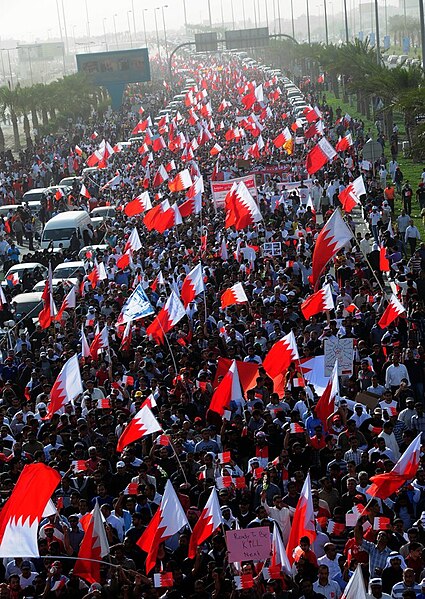
Over 100000 Bahrainis taking part in the "March of Loyalty to Martyrs" in Manama honoring political dissidents killed by security forces