The 2016 North Indian Ocean cyclone season was an event in the annual cycle of tropical cyclone formation. It was the deadliest season since 2010, killing more than 400 people. The season was an avera
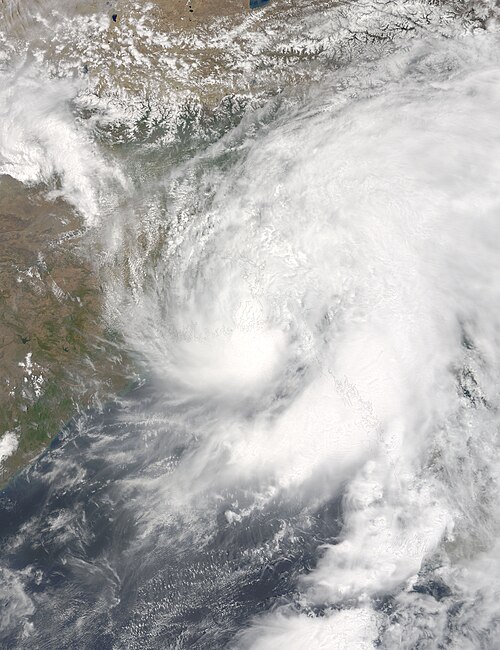
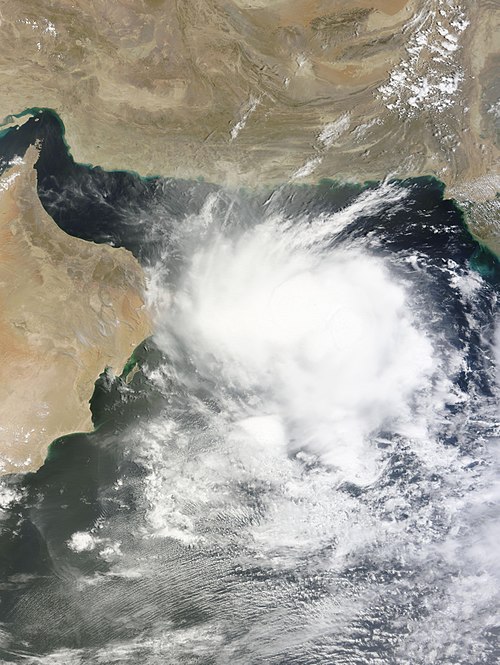

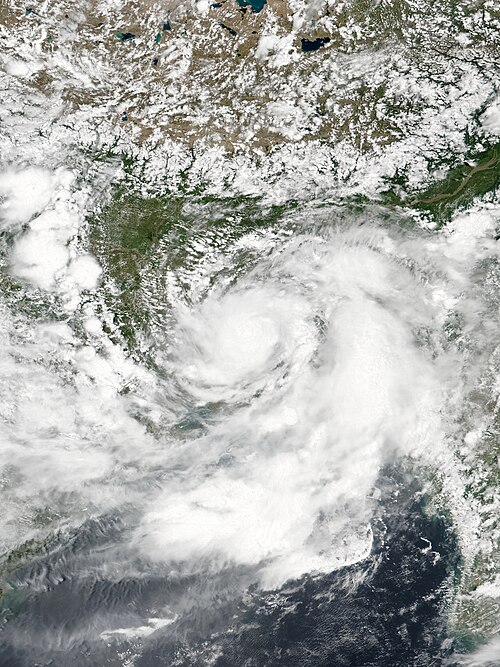
In the Indian Ocean north of the equator, tropical cyclones can form throughout the year on either side of the Indian subcontinent, although most frequently between April and June, and between October

Very severe cyclonic storms Luban (left) and Titli (right) over the Arabian Sea and the Bay of Bengal in October 2018

This ESSA 3 satellite image was taken on November 3, 1966, at 0819 UTC of a tropical cyclone striking Madras, India

The 1999 Odisha Cyclone making landfall over Odisha in 1999.
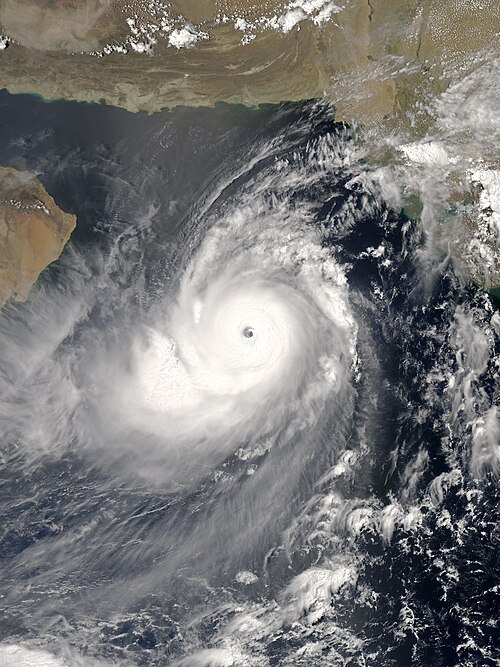
Cyclone Gonu at its peak in 2007.