Abd Allah ibn al-Zubayr
Videos
Abd Allah ibn al-Zubayr ibn al-Awwam was the leader of a caliphate based in Mecca in opposition to the Umayyads during the Second Fitna from 683 until his death in 692.
Sasanian-style silver dirham minted in the name of Abd Allah ibn al-Zubayr in Fars in 690/91

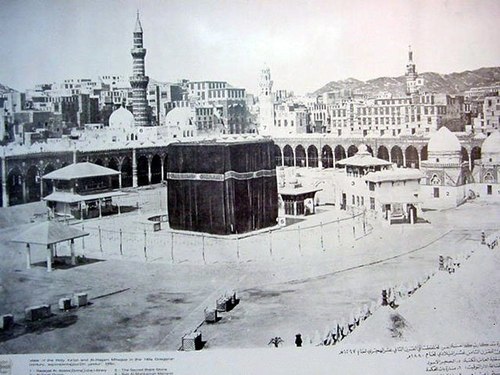
The Kaaba in 1882. Throughout his revolt, Ibn al-Zubayr used the sanctuary as his base of operations and it was twice besieged, in 683 and 692. He rebuilt it following severe damage during the first siege, but his changes were later reversed.
Abd al-Malik ibn Marwan
Videos
Abd al-Malik ibn Marwan ibn al-Hakam, was the fifth Umayyad caliph, ruling from April 685 until his death in October 705. A member of the first generation of born Muslims, his early life in Medina was
Abd Allah ibn al-Zubayr
…Kharijite forces. Ibn al-Zubayr's brother Mus'ab reasserted Ibn al-Zubayr's suzerainty in Iraq by 687, but was defeated and killed by Marwan's successor Abd al-Malik in 691. The Umayyad commander al-Hajjaj ibn Yusuf proceeded to besiege Ibn al-Zubayr in his Meccan stronghold, where he was ultimately defeated and…

Gold dinar minted by the Umayyads in 695, which likely depicts Abd al-Malik.

The Ka'aba in Mecca (pictured in 1917) was the headquarters of Ibn al-Zubayr where he was besieged and defeated by Abd al-Malik's forces led by al-Hajjaj ibn Yusuf in 692

In 698 Abd al-Malik's forces led by Hassan ibn al-Nu'man destroyed Carthage (ruins pictured in 2013), which signaled "the final, irretrievable end" of Byzantine power in North Africa.

The nearby town of Tunis (pictured in 2017) was subsequently founded on the caliph's orders and equipped with a naval arsenal.