In the United States, abolitionism, the movement that sought to end chattel slavery in the country, was active from the colonial era until the American Civil War, the end of which brought about the ab
Collection box for the Massachusetts Anti-Slavery Society, c. 1850, design partly based on the Wedgwood anti-slavery medallion

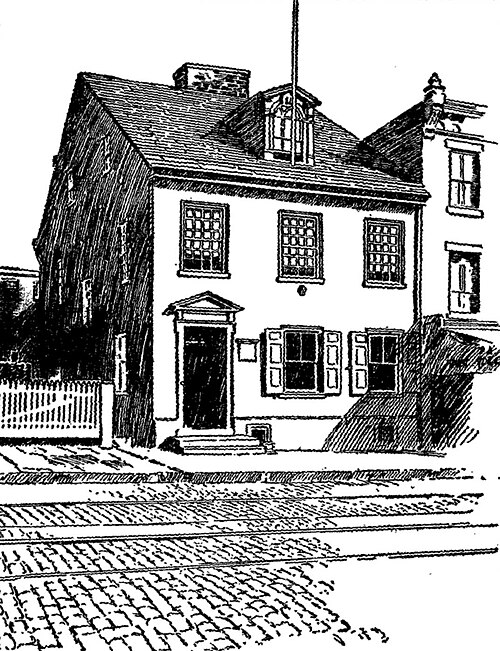
Thones Kunders's house at 5109 Germantown Avenue, where the 1688 Germantown Quaker Petition Against Slavery was written

Samuel Sewall (1652–1730), judge who wrote The Selling of Joseph (1700) which denounced the spread of slavery in the American colonies

Grave of Benjamin Kent, lawyer who freed a slave in America (1766)
John Brown (abolitionist)
Videos
John Brown was an American abolitionist in the decades preceding the American Civil War. An evangelical Christian of strong religious convictions, Brown was profoundly influenced by the Puritan faith
Abolitionism in the United States
…A small but dedicated group, under leaders such as William Lloyd Garrison and Frederick Douglass, agitated for abolition in the mid-19th century. John Brown became an advocate and militia leader in attempting to end slavery by force of arms. In the Civil War, immediate emancipation became a war goal for the…

The house in which Brown was born, in Torrington, Connecticut, was photographed in 1896 and destroyed by fire in 1918.

John Brown's Tannery, in 1885

Mary Ann Brown (née Day), wife of John Brown, married in 1833, with Annie (left) and Sarah (right) in 1851

Wood engraving of the pro-slavery mob setting fire to Gilman & Godfrey's warehouse, where Elijah Parish Lovejoy hid his printing press