Accumulator (computing)
Videos
In a computer's central processing unit, the accumulator is a register in which intermediate arithmetic logic unit results are stored.

Walther WSR-16 mechanical calculator. The row of digit-wheels in the carriage (at the front), is the Accumulator.

Front panel of an IBM 701 computer with lights displaying the accumulator and other registers
MOS Technology 6502
Videos
The MOS Technology 6502 is an 8-bit microprocessor that was designed by a small team led by Chuck Peddle for MOS Technology and was launched in September 1975. The design team had formerly worked at M
Accumulator (computing)
…called accumulators, referred to by numbers. Then, with the introduction of microprocessors, accumulator architectures were again popular with the MOS 6502 being a notable example. Many 8-bit microcontrollers that are still popular as of 2014, such as the PICmicro and 8051, are accumulator-based machines…

6502 processor in a DIP-40 plastic package. The four-digit date code indicates it was made in the 45th week (November 4–10) of 1985.

Motorola 6800 demonstration board built by Chuck Peddle and John Buchanan in 1974

A 1973 MOS Technology advertisement highlighting their custom integrated circuit capabilities
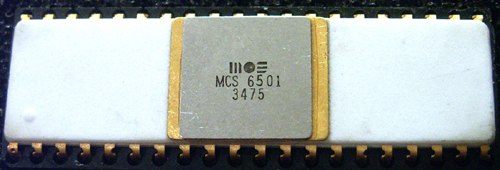
MOS Technology MCS6501, in white ceramic package, made in late August 1975